do what you want
SoSe 2025
mapping the protest
studio bader
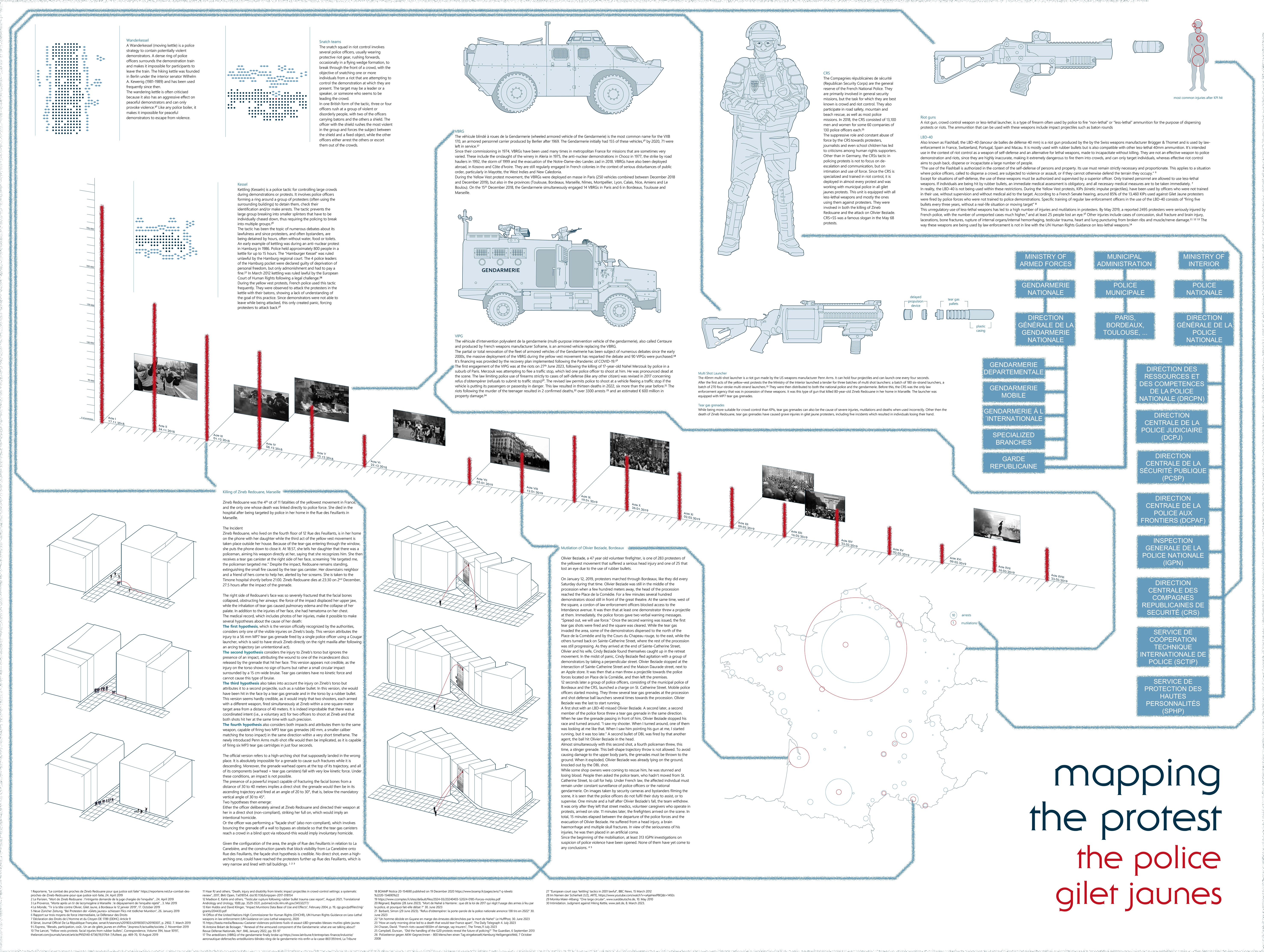
In the rise of authoritarian governments, protests have become the most important tool of resistance. This surge of resistance is met with more severe and violent counter measures by police. Especially the rise of so-called “less lethal weapons” and the injuries, mutilations and deaths they cause is a worrying development. To understand and visualize the modern protest and its role in our cities and our society as a whole, I am mapping the two players of a protest, the police and the people, in the context of two protests movements, the gilet jaune movement in France and the protest against RWE in Lützerath.
Starting in 2018, originally to protests the rising fuel prices, the “mouvement des gilets jaunes”, the yellow vest movement, was active all over France. The protest quickly became very violent and was met with excessive police force and violence. This first map shows the militarization of the French police, the weapons they use against civilians, their tactics and the consequences of this development. This research is representative of a trend we see all over the world, a trend of militarization of the police and the violent repression of protests, seen right now in Los Angeles, Istanbul and Belgrade, but also to a certain extent in Germany, especially in the context of protests against the genocide of the Palestinian people.
© Benjamin Rieser. All rights reserved.
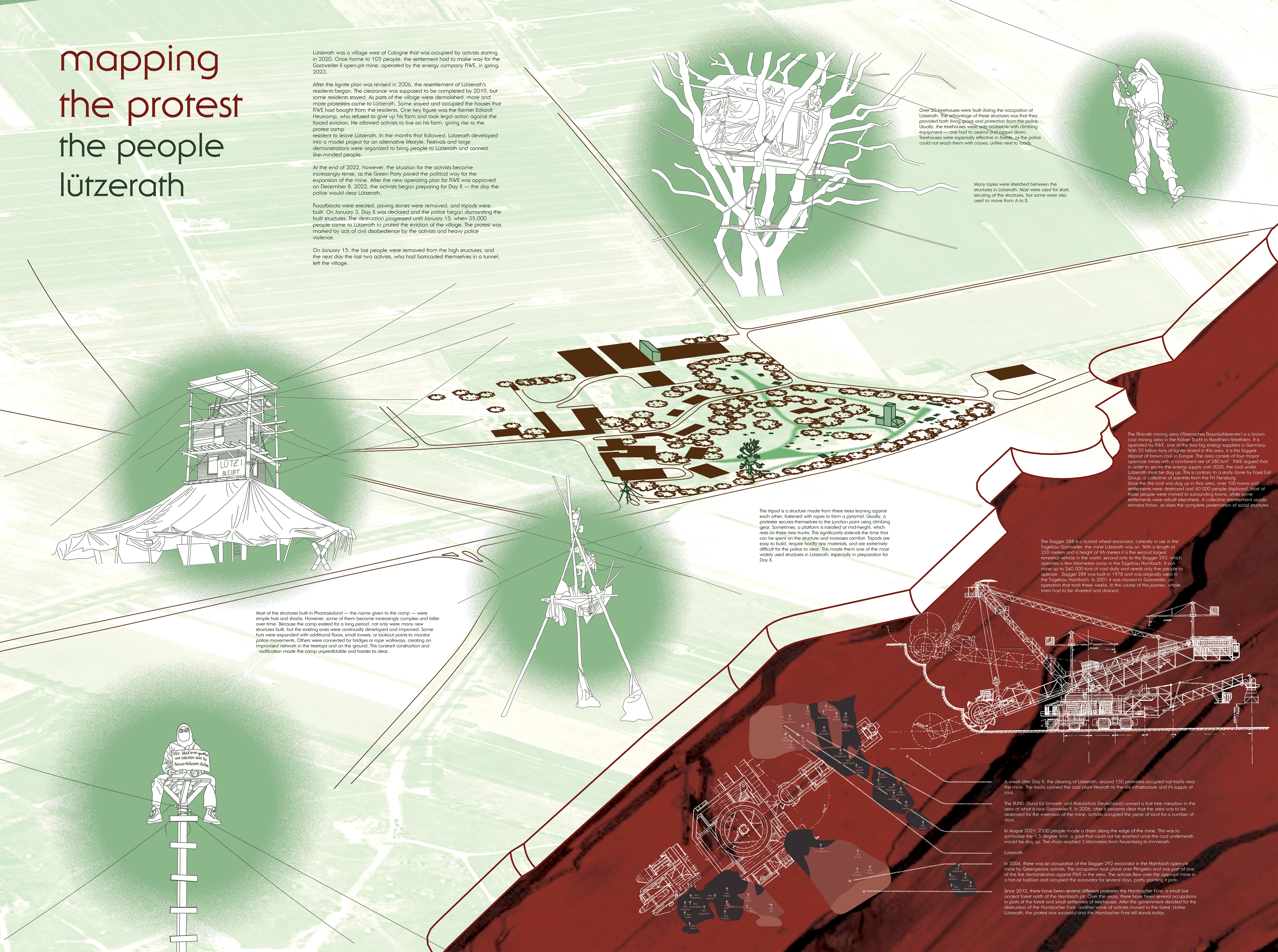
Lützerath was a village west of Cologne that was occupied by activists starting in 2020. Once home to 105 people, the settlement had to make way for the Garzweiler II open-pit mine, operated by the energy company RWE, in spring 2023. After the lignite plan was revised in 2006, the resettlement of Lützerath’s residents began. The clearance was supposed to be completed by 2019, but some residents stayed. As parts of the village were demolished, more and more protesters came to Lützerath. Some stayed and occupied the houses that RWE had bought from the residents. One key figure was the farmer Eckardt Heukamp, who refused to give up his farm and took legal action against the forced eviction. He allowed activists to live on his farm, giving rise to the protest camp resident to leave Lützerath. In the months that followed, Lützerath developed into a model project for an alternative lifestyle. Festivals and large demonstrations were organized to bring people to Lützerath and connect like-minded people. At the end of 2022, however, the situation for the activists became increasingly tense, as the Green Party paved the political way for the expansion of the mine. After the new operating plan for RWE was approved on December 8, 2022, the activists began preparing for Day X — the day the police would clear Lützerath. On January 15, the last people were removed from the high structures, and the next day the last two activists, who had barricaded themselves in a tunnel, left the village.