Inhabiting Geometry
Anne Griswold Tyng was an American architect, theorist, and academic. She is best known for her collaboration with Louis Kahn, with whom she worked for 29 years. Her personal relationship with Kahn influenced his own designs – the concept for Kahn's famous but never-built "City Tower" was largely Tyng's idea. However, when the model was exhibited, Kahn left her name unmentioned on the accompanying label.
In her work, Tyng was fascinated by mathematics and geometry, particularly the Platonic solids – three-dimensional shapes with equal sides and equal angles. These five basic forms provided the foundation of her architecture and defined the spaces in which she imagined life taking place: "Living spaces were carved out of a continuous geometry, similar to a honeycomb."
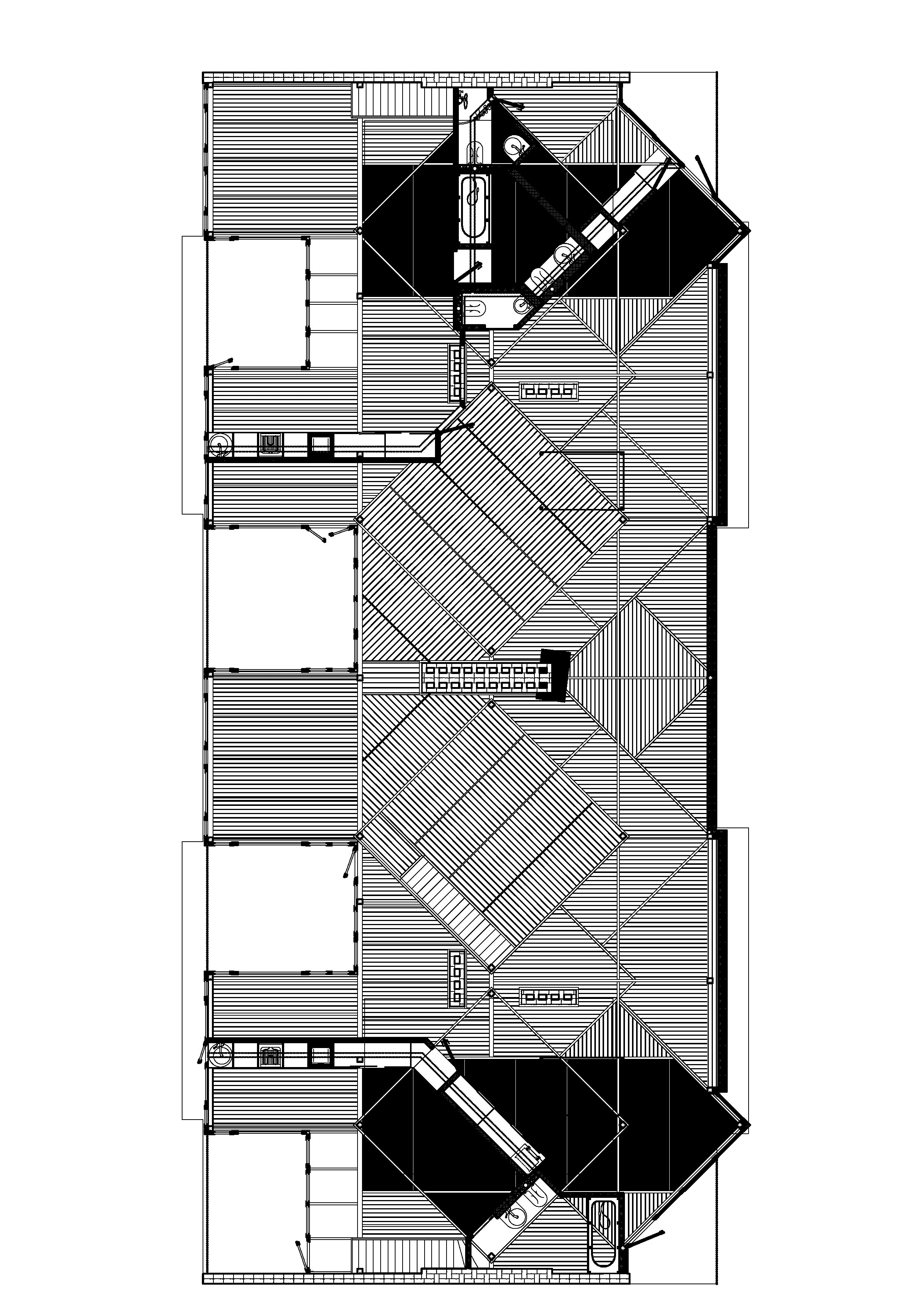
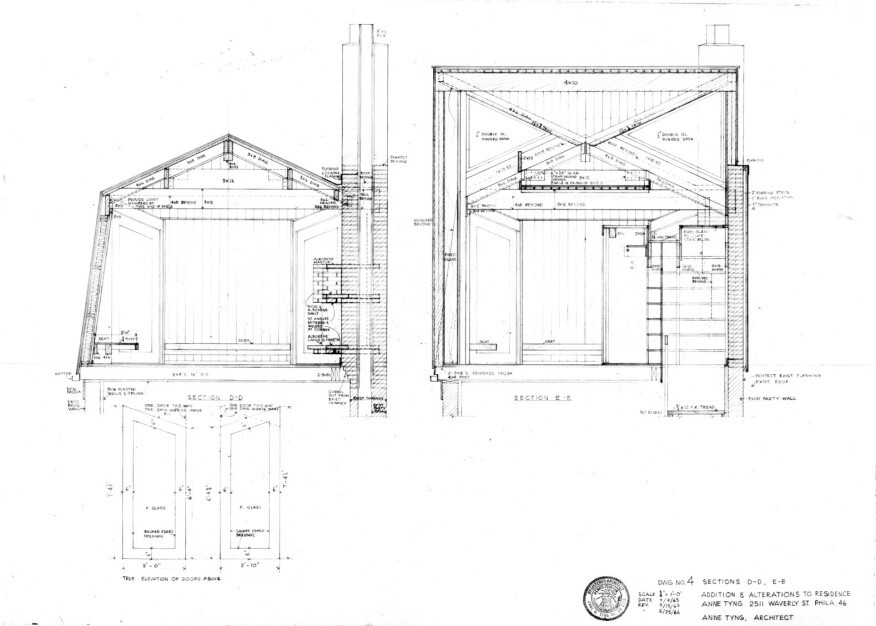
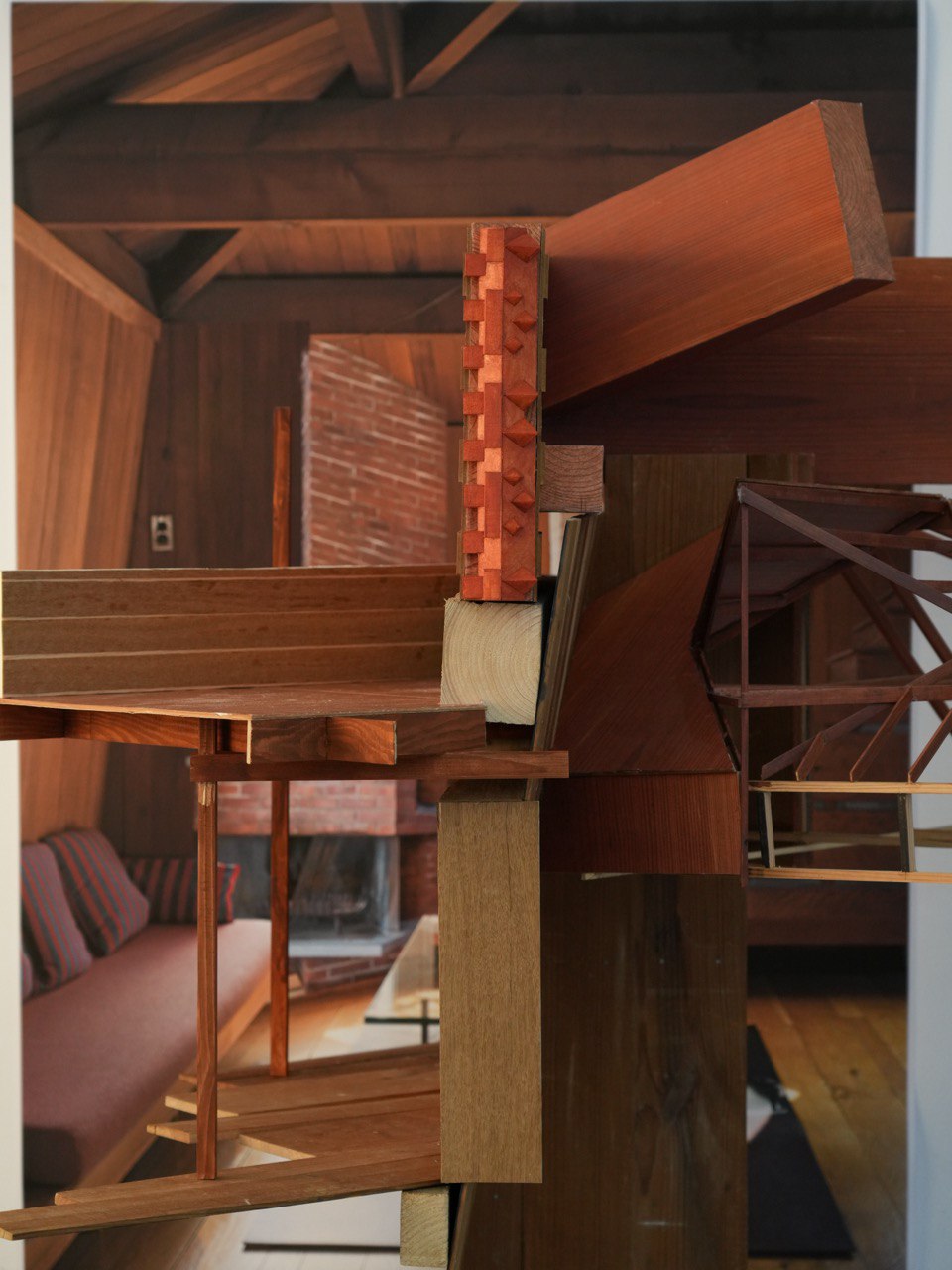
One of the few realized buildings by Anne Tyng and the only one still in existence is her own house in Philadelphia, which she renovated and expanded in the 1960s. The roof – a geometric wooden construction in the form of a space frame – sits on the foundation of the townhouse like a crystal.
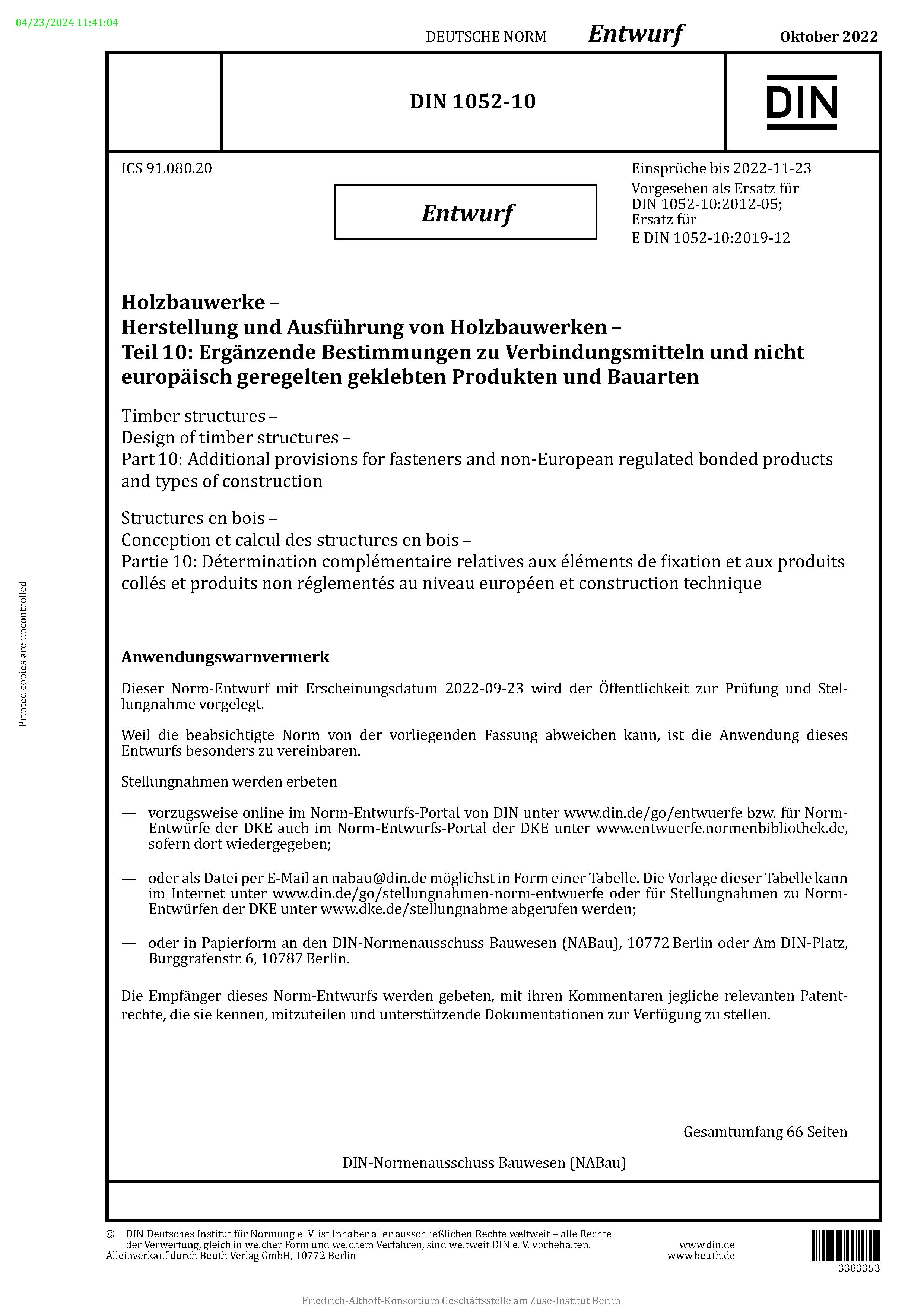
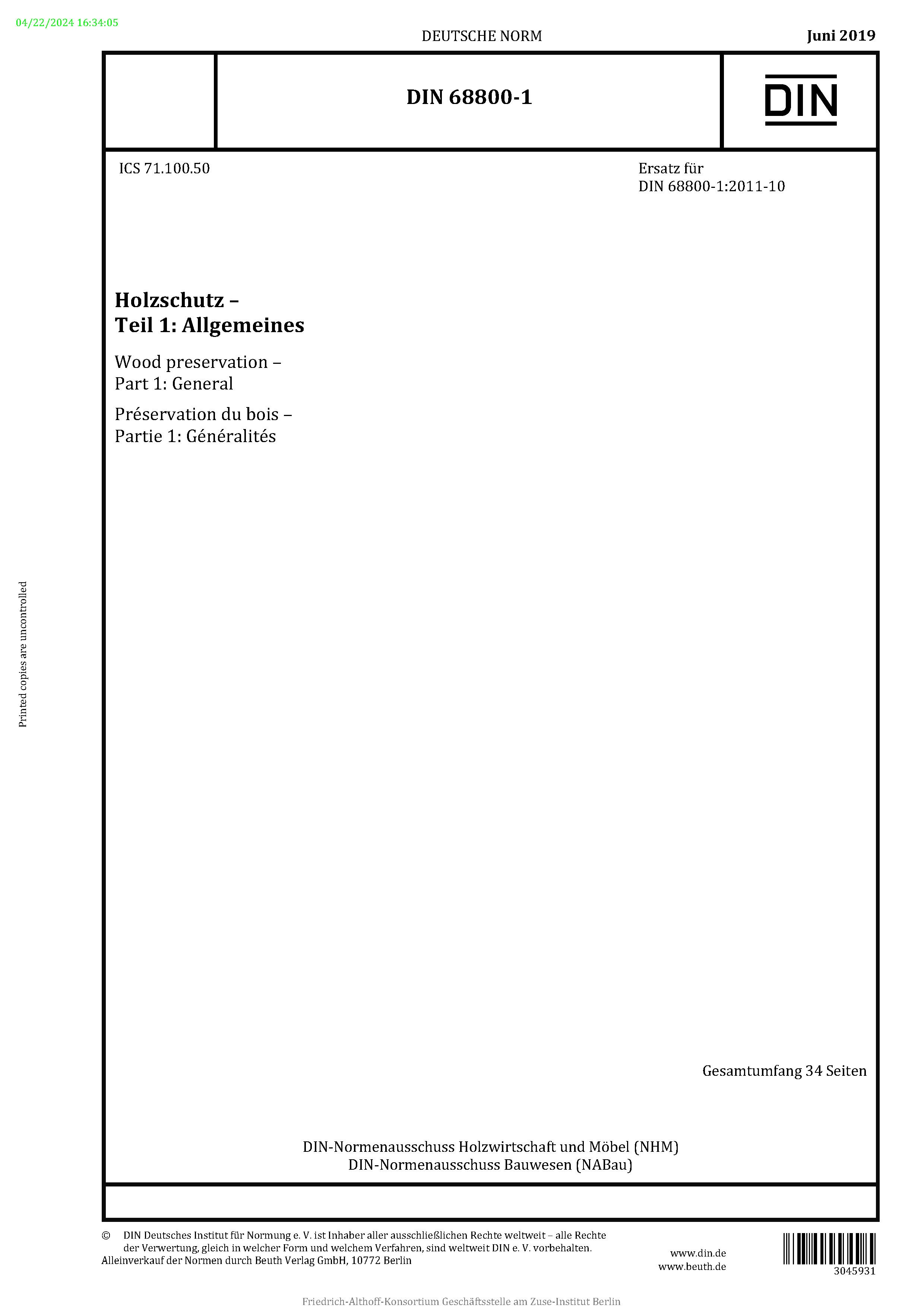
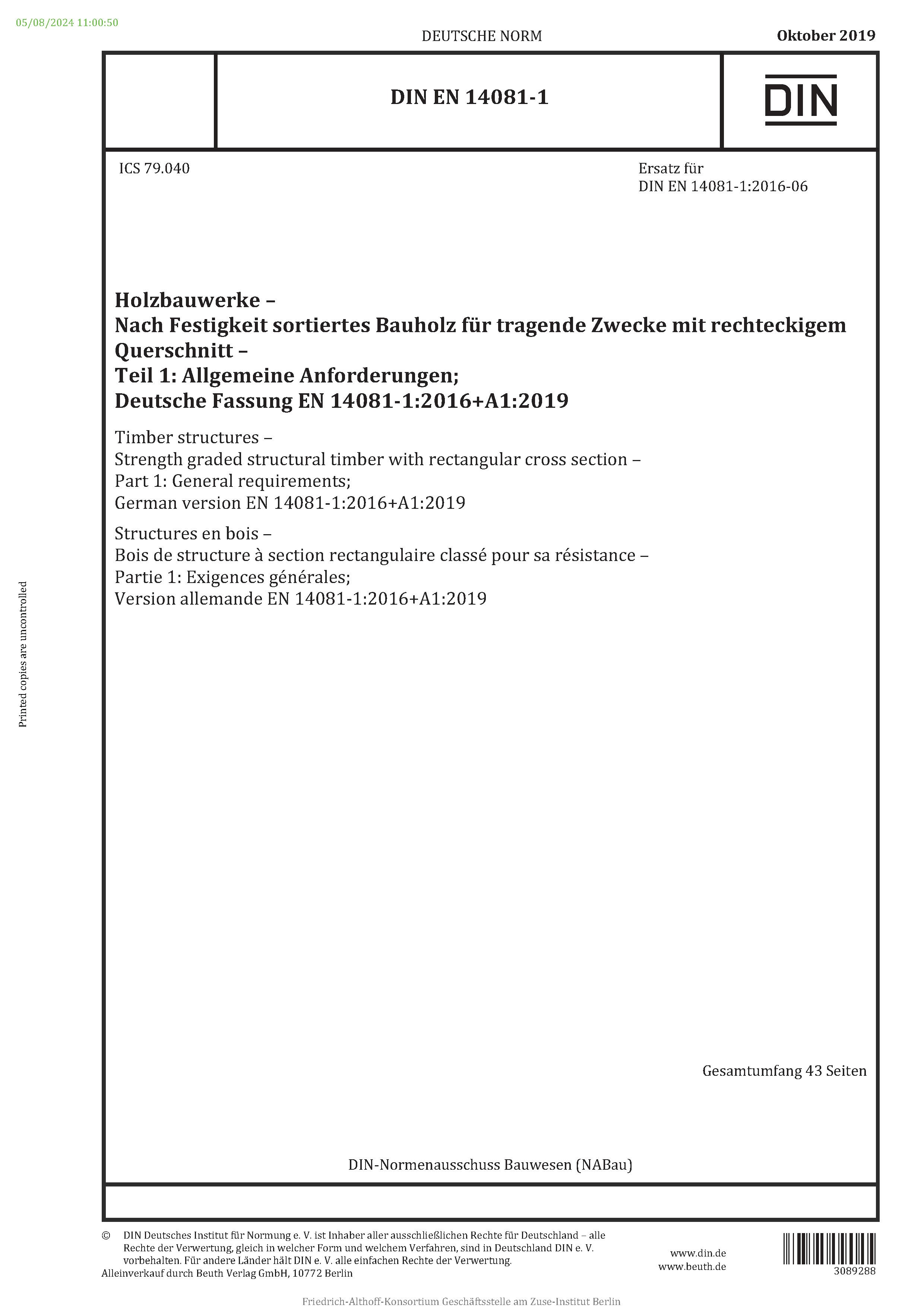
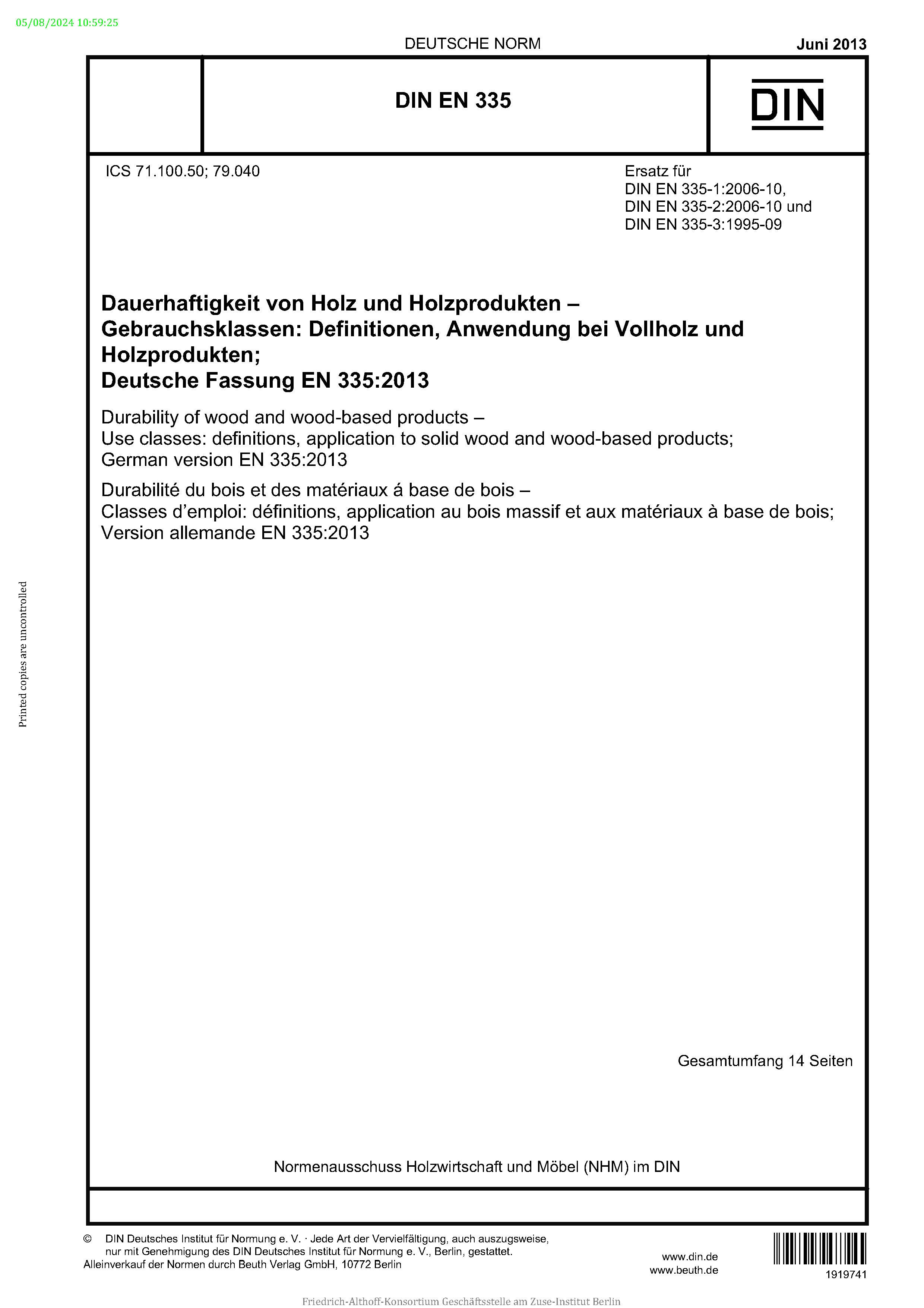
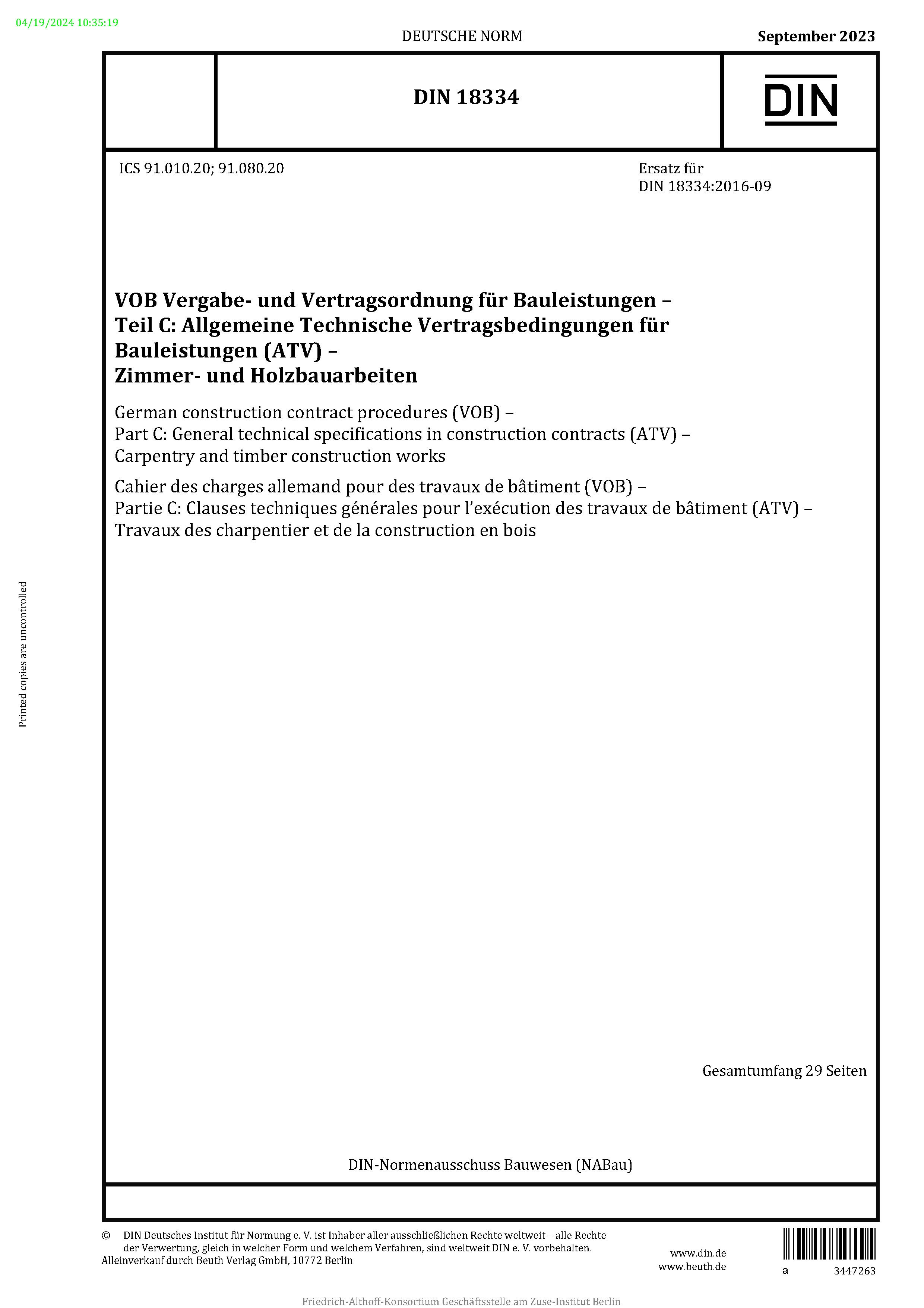
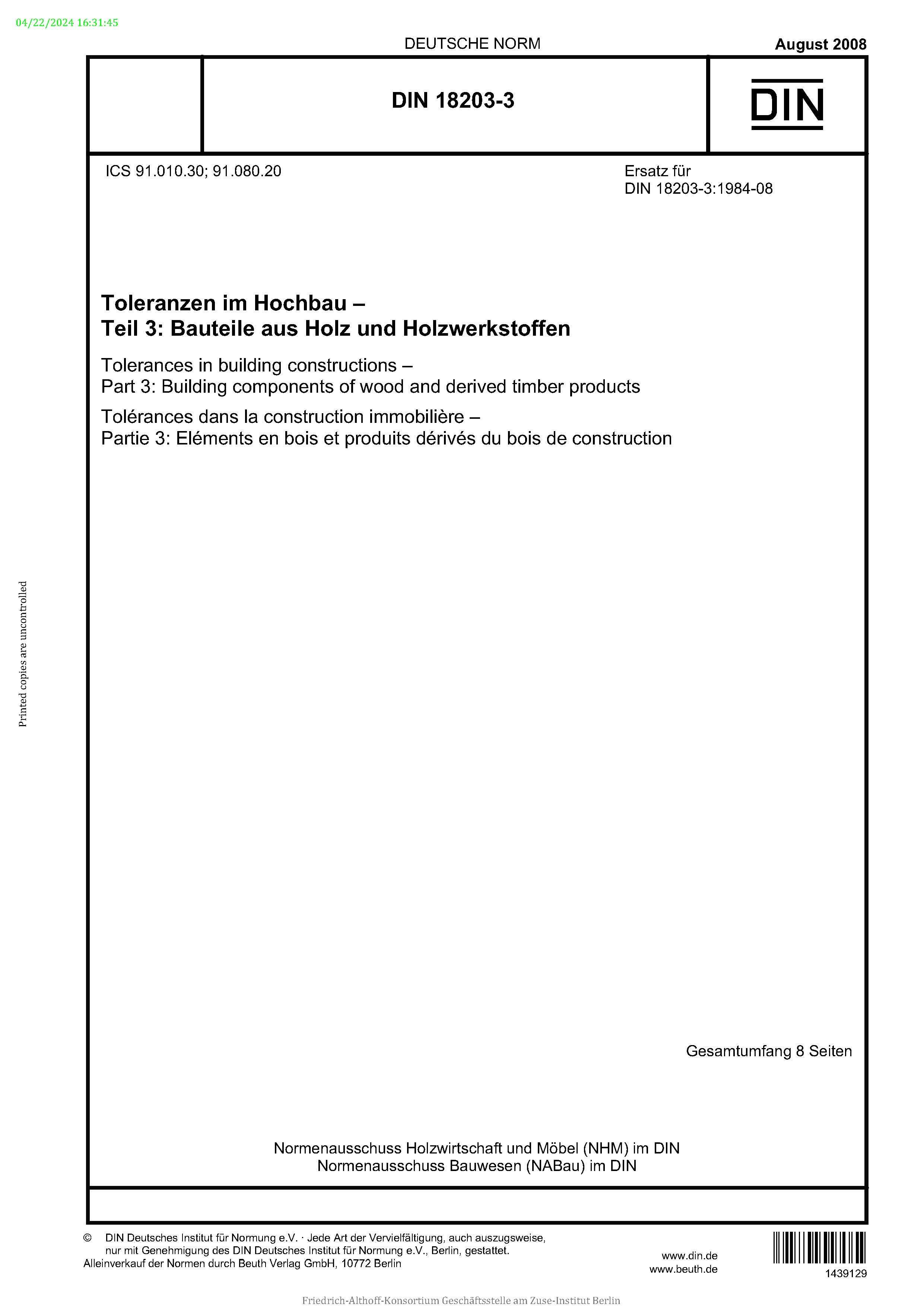
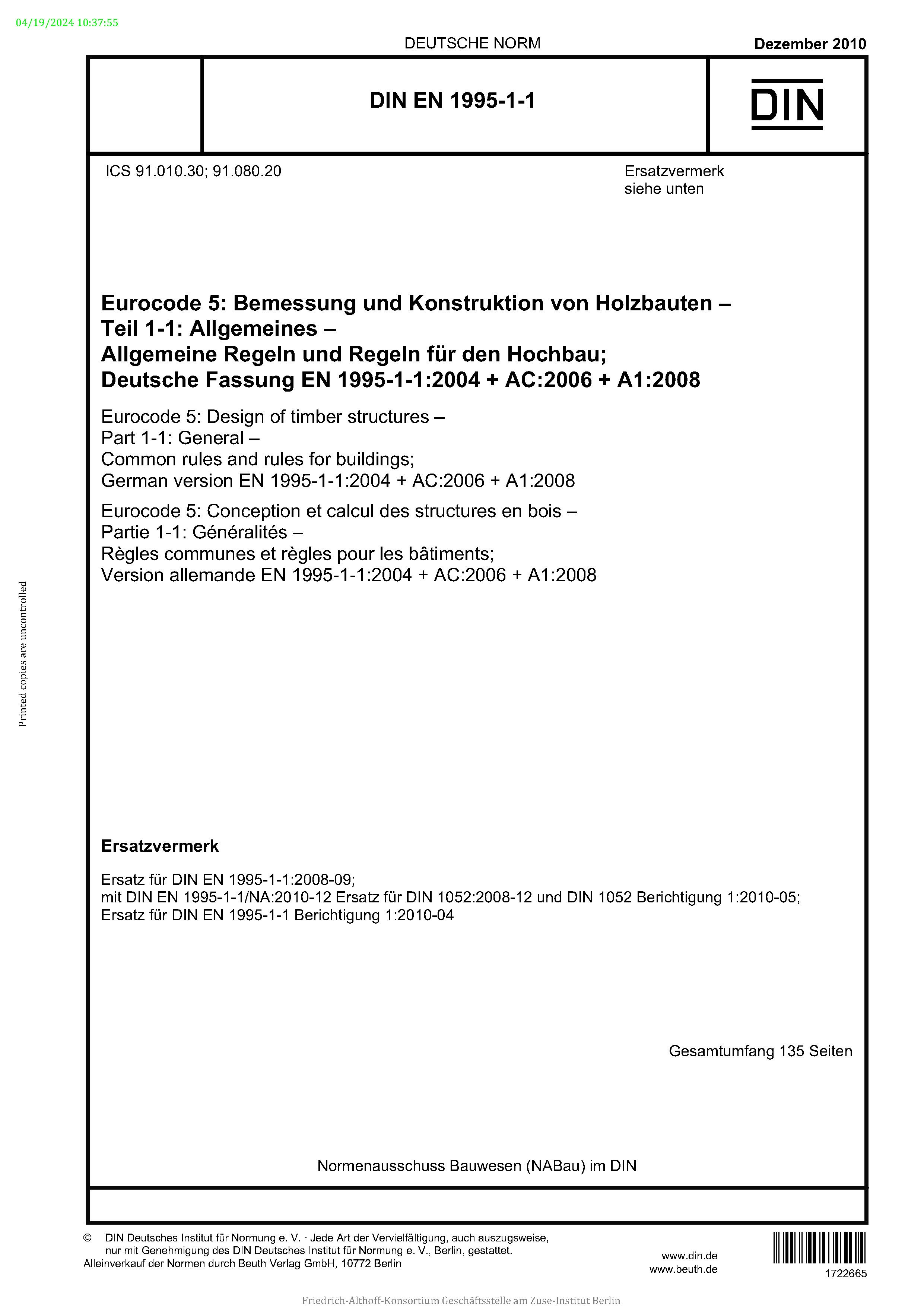
The goal of our project was to translate the reference, an attic conversion from 1960s America, into a design that could be built in Berlin today. How can we preserve the materials, construction method, and aesthetics of this building without producing defects and violating DIN standards? Since we were working with carpentry, fire protection was a major issue above all. We tried different approaches in the three phases of the semester. From oversizing to hidden load-bearing constructions to glossy fire-resistant coatings, we combined all ideas in a single, large model.
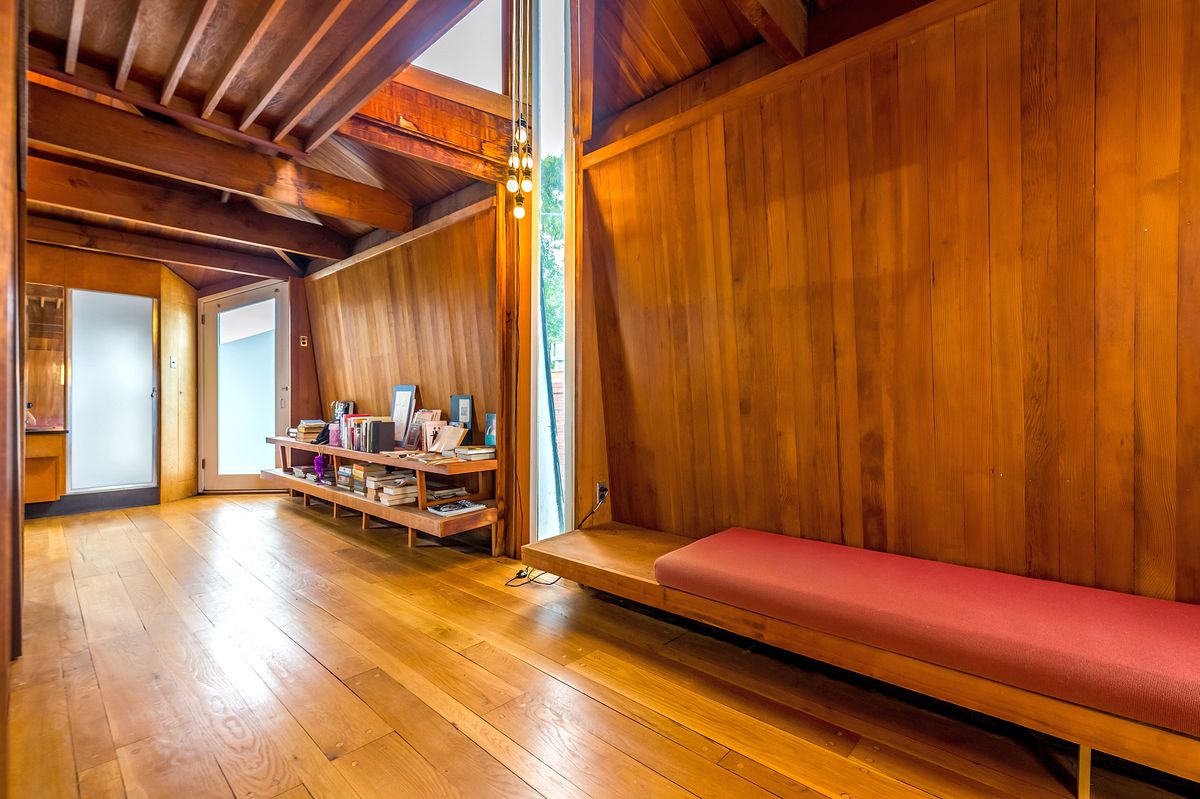
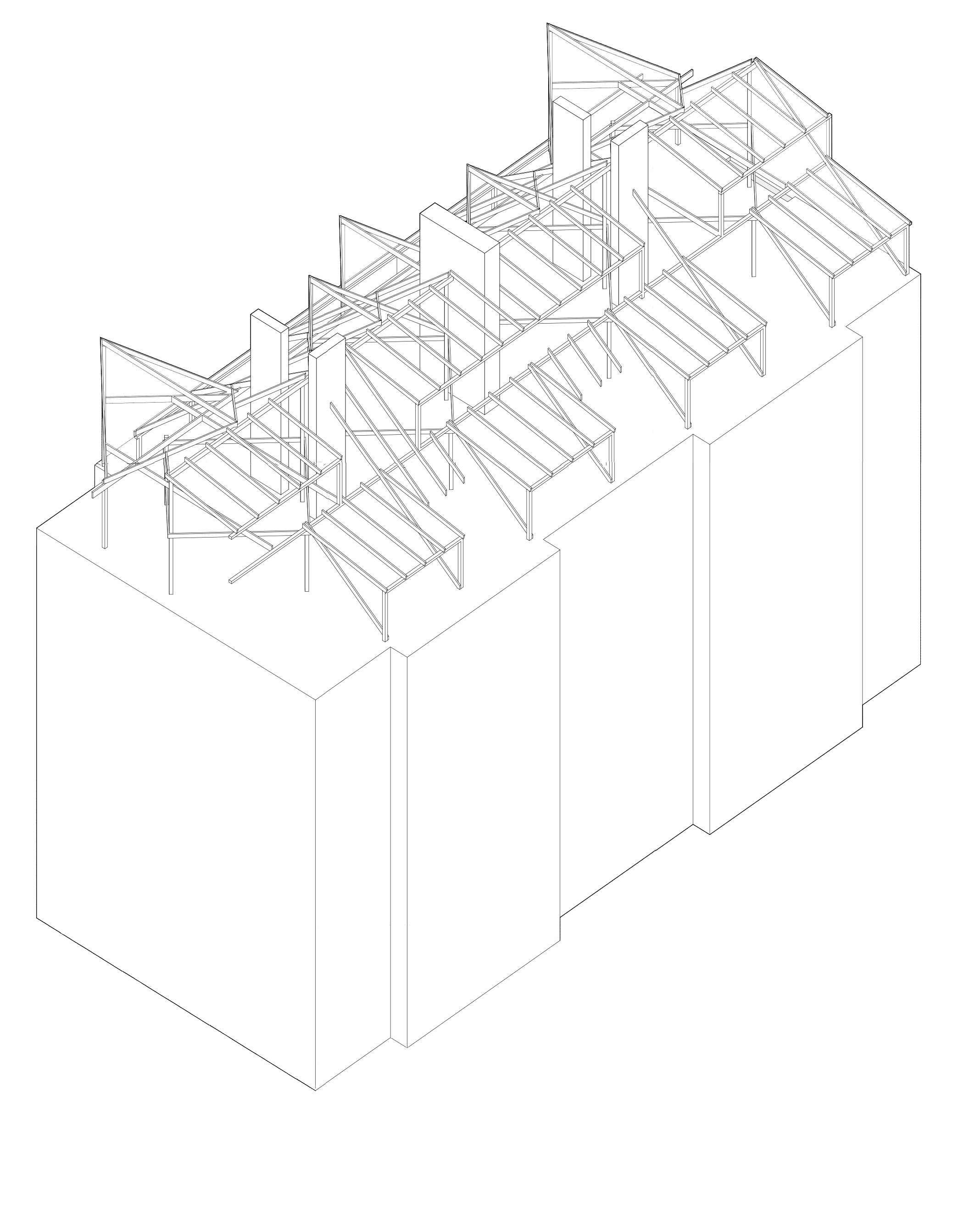
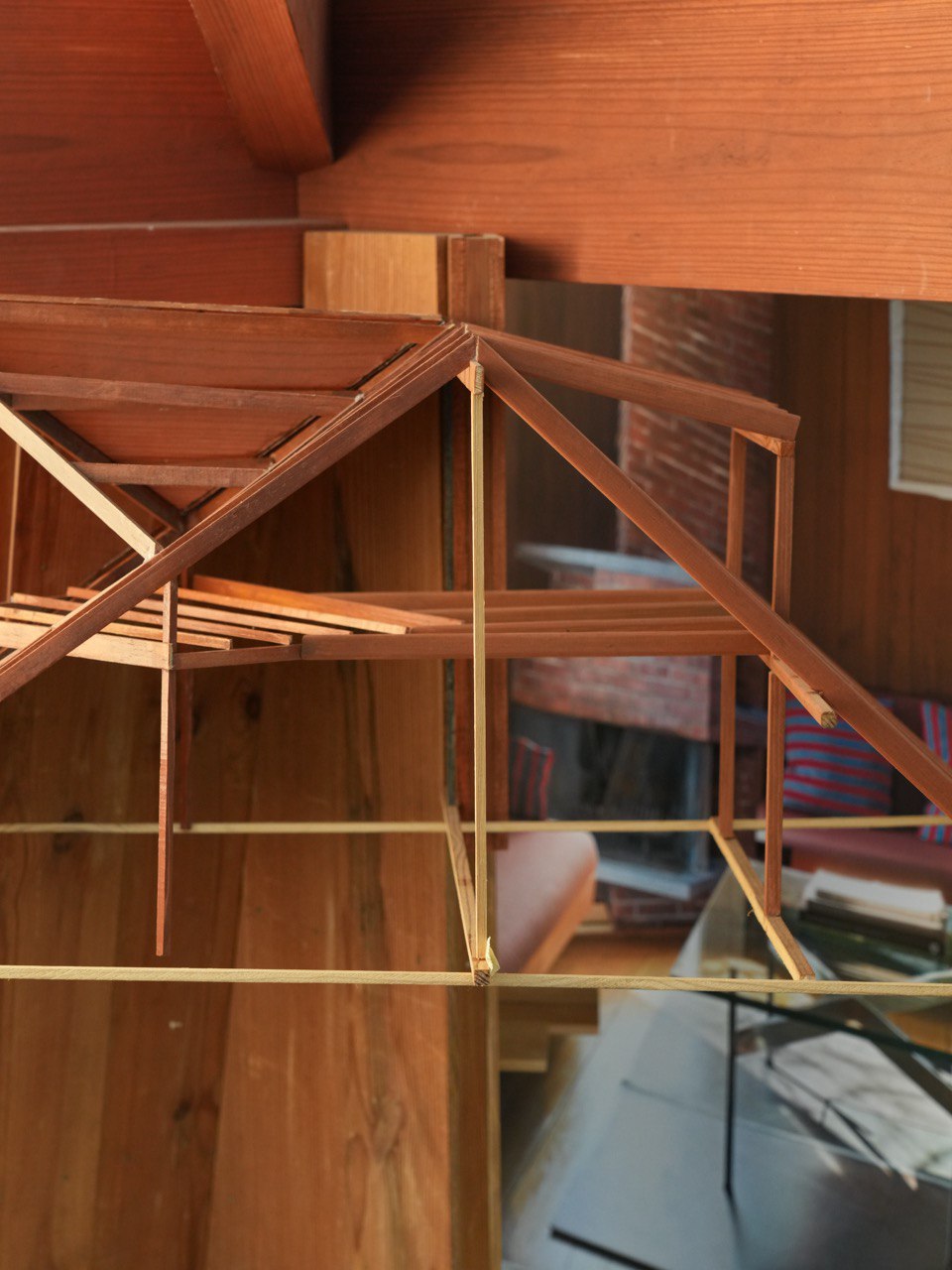
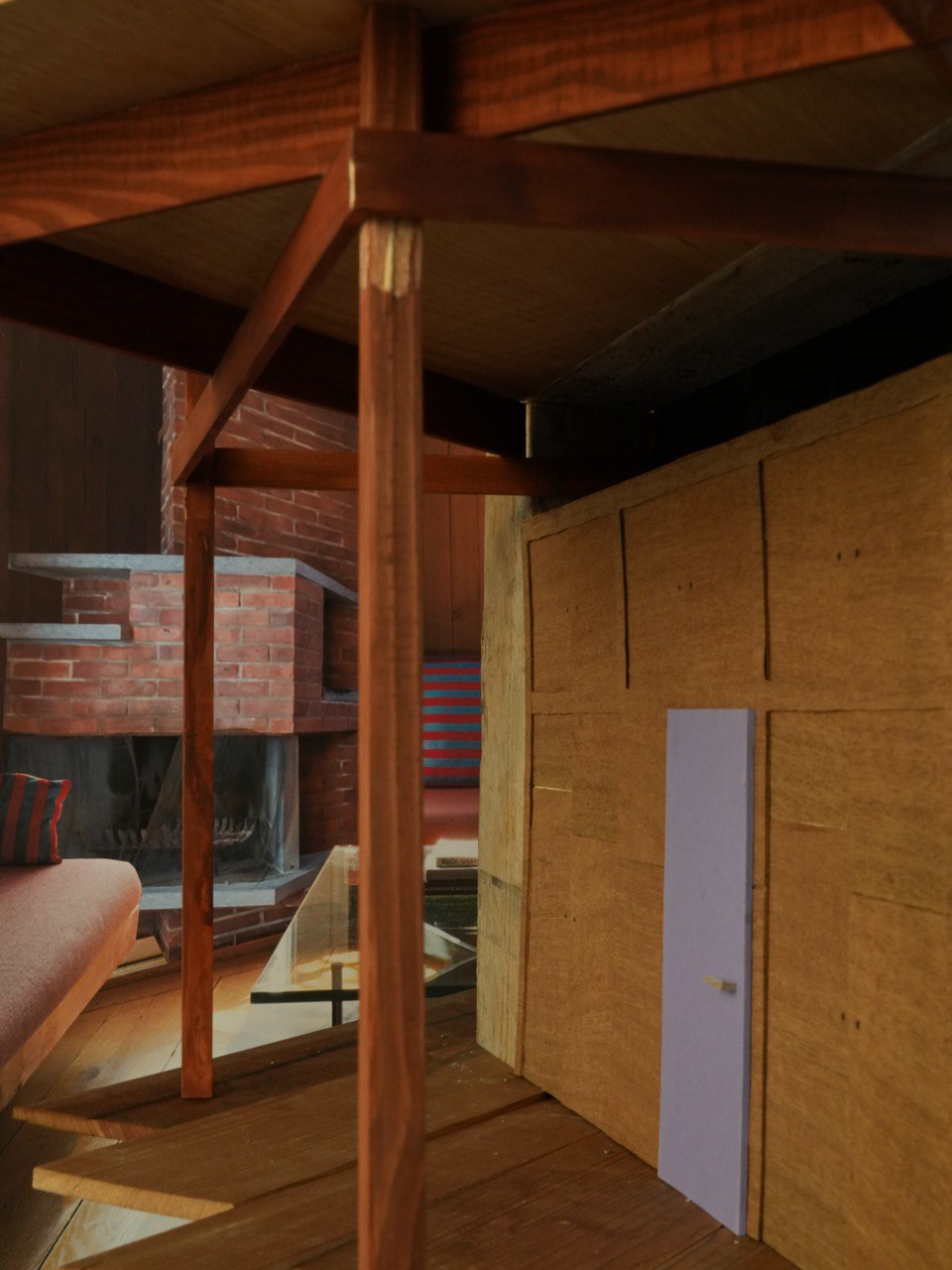
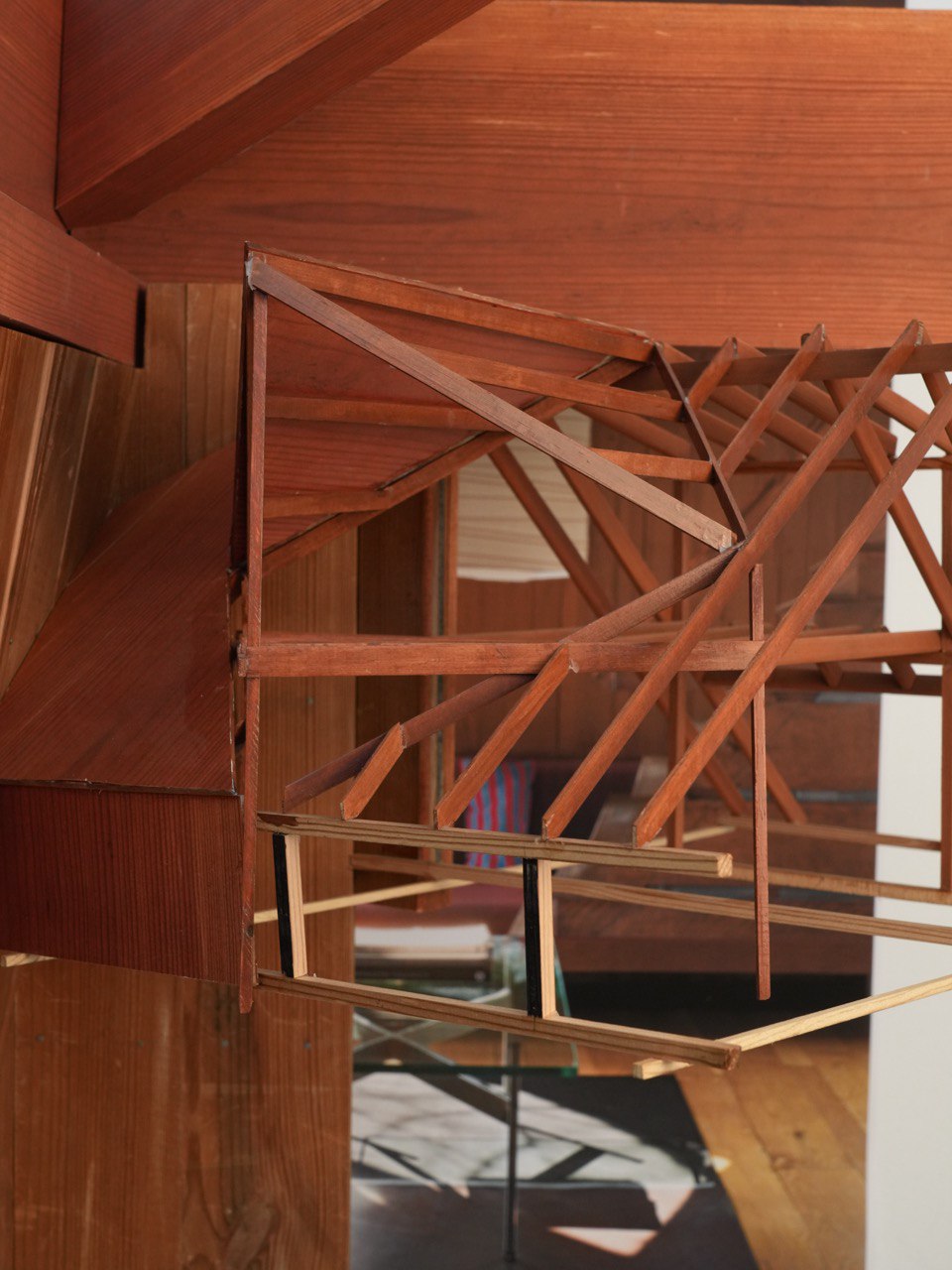
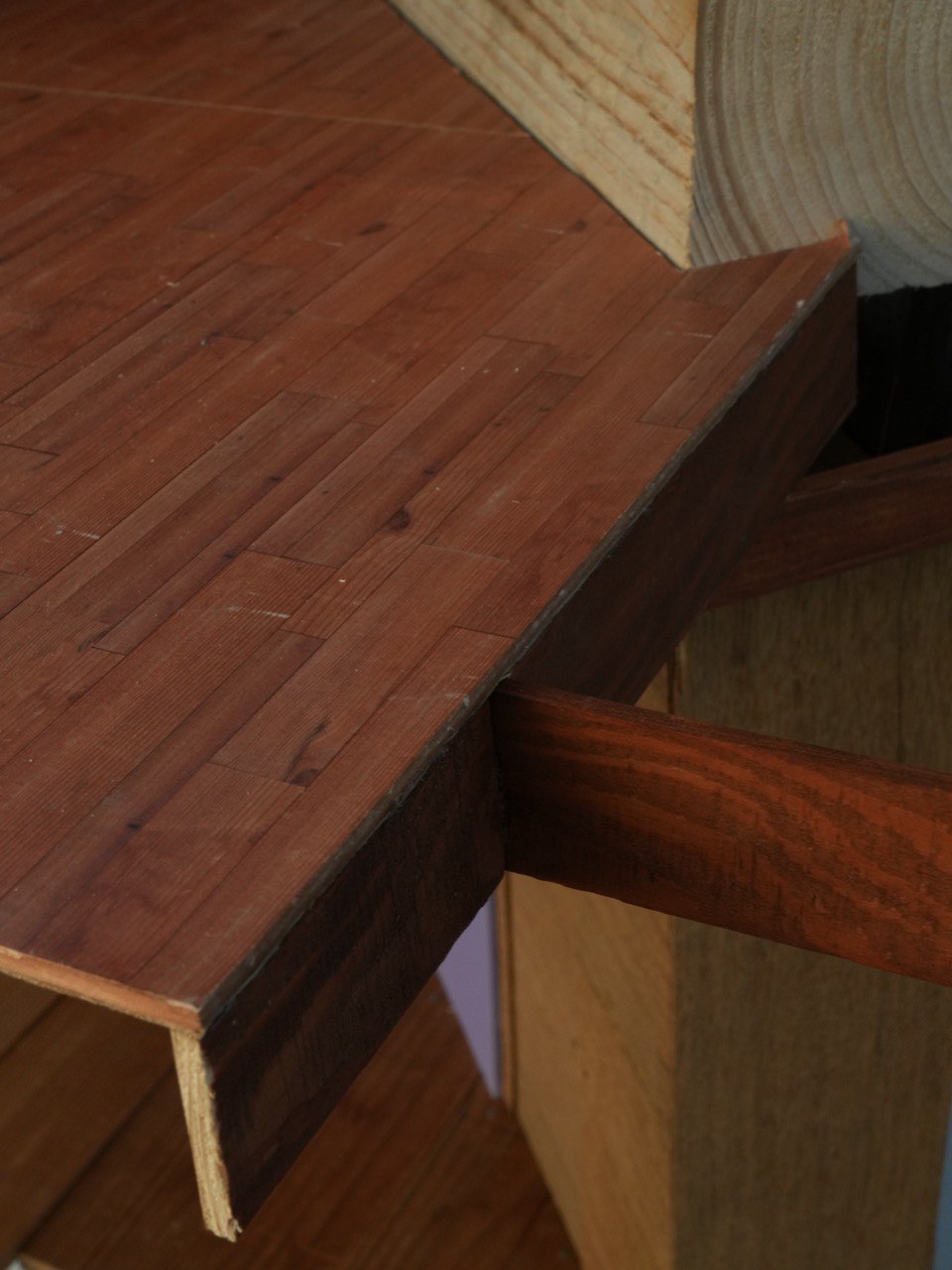
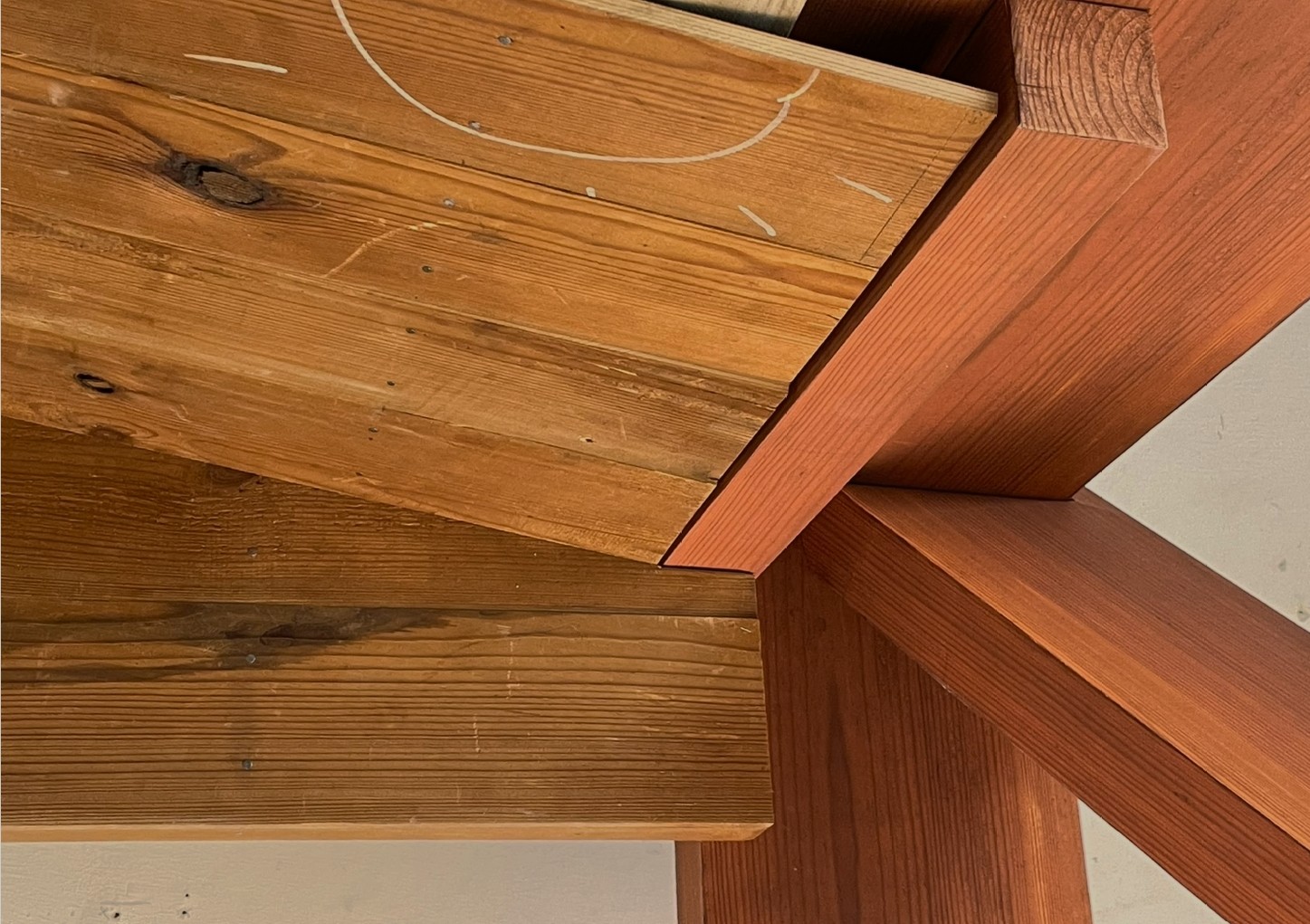
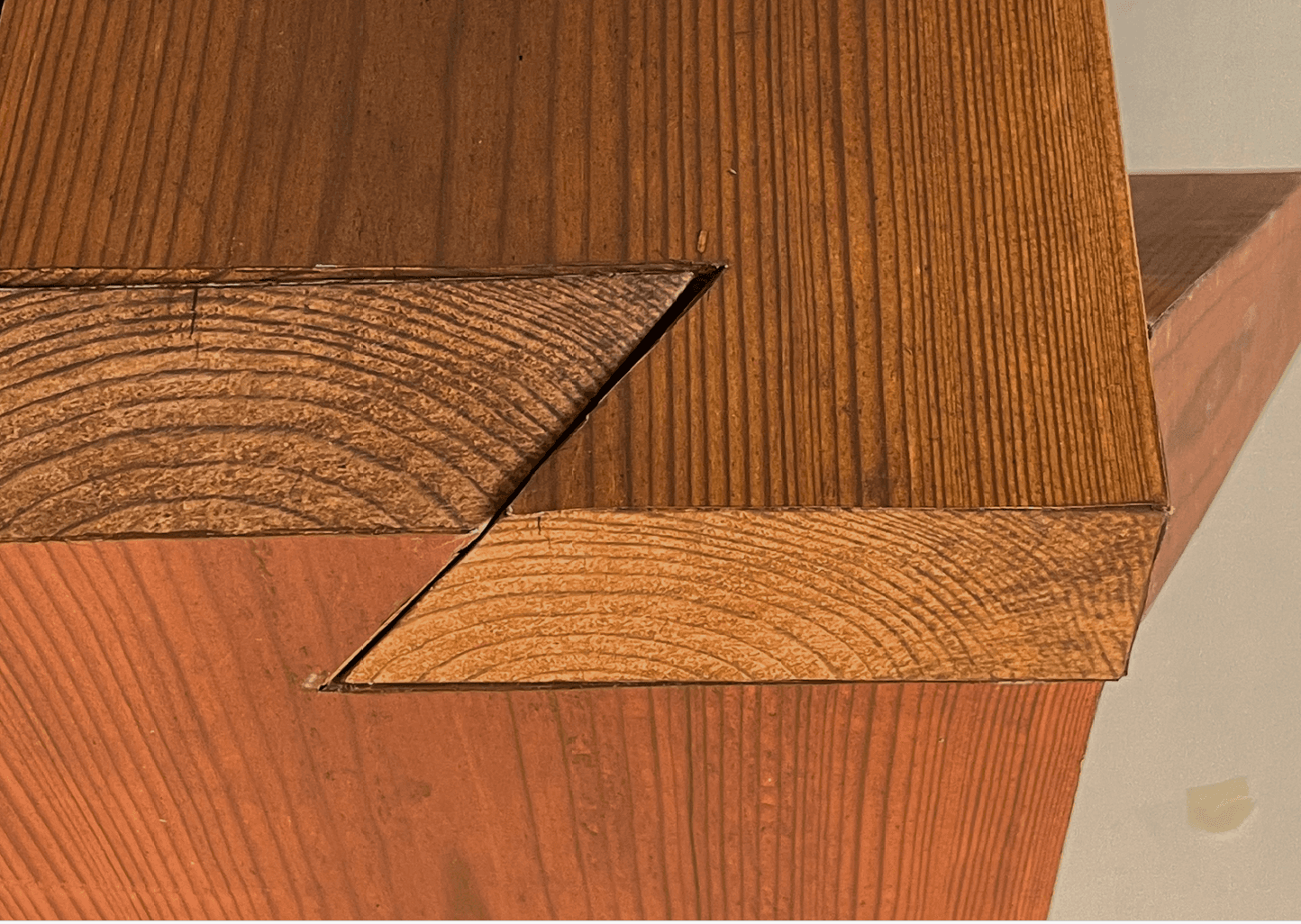
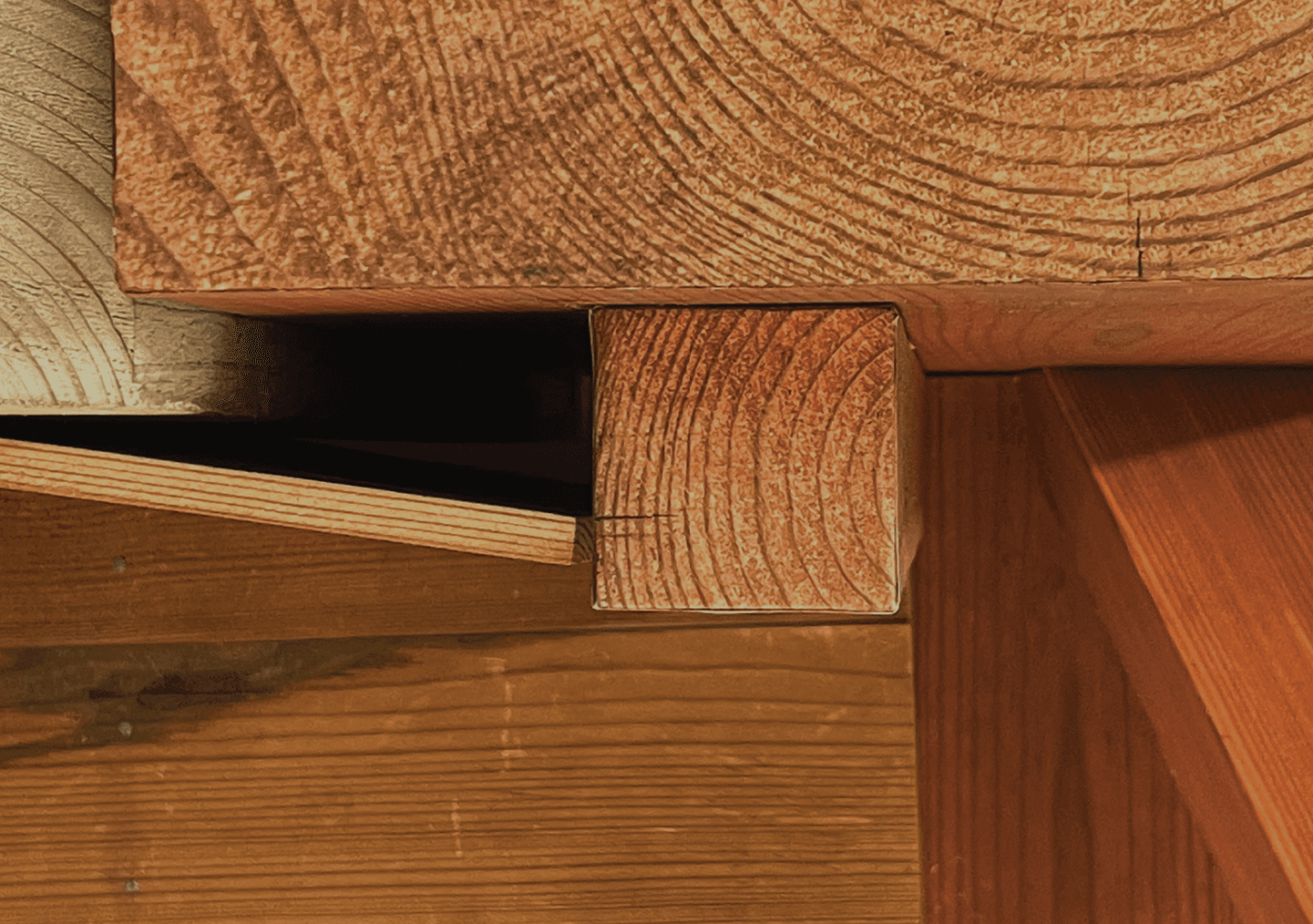
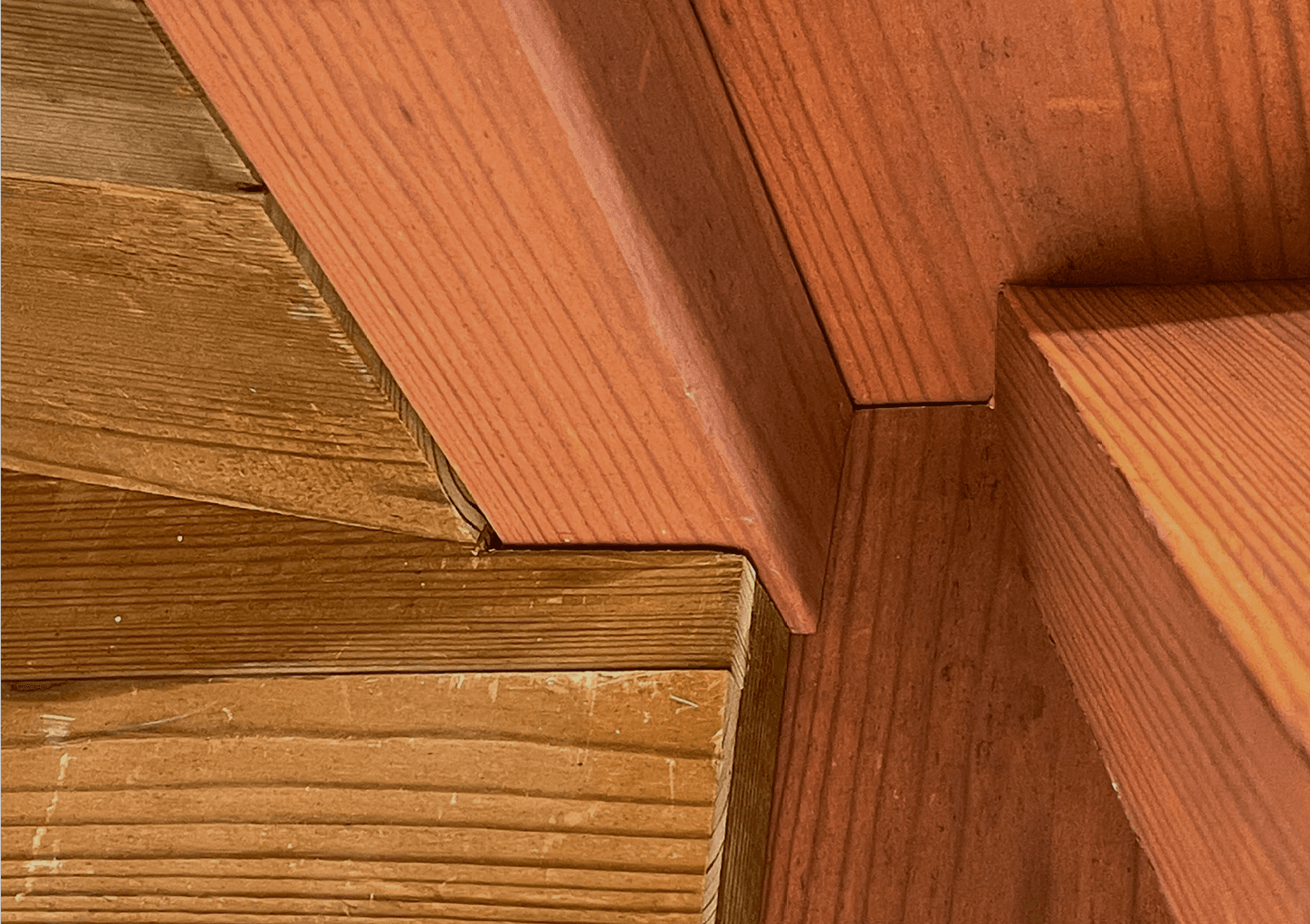
In the first part of the semester, we focused on the construction of the reference building. We wanted to understand how the complex geometry of the roof functions, how it was constructed, and how the beams were joined together. This created the basic framework of our model, a single corner of the attic conversion at a 1:1 scale. While the form was retained, we deviated from the existing structure in the construction. Nail plates became traditional carpentry joints, in accordance with European and German standards.
In the second part of the semester, we translated Tyng's formal language onto a roof in Berlin Moabit. We wanted to transfer both the geometric form of the roof and the visible beams and joists into our own design. We developed more or less code-compliant approaches to meet the strict fire protection regulations. The roof was divided into two parts: on the courtyard side we used a glossy, transparent fire-retardant coating, while on the street side the timber construction was oversized to achieve the necessary fire resistance class. The two halves also had different design approaches, one side "normal" and one unconventional.
We spent the third part of the semester translating these approaches into the design of an attic conversion for an entire house in the block. The result was two residential units for four people each, as well as spaces that were accessible to the other residents of the building.
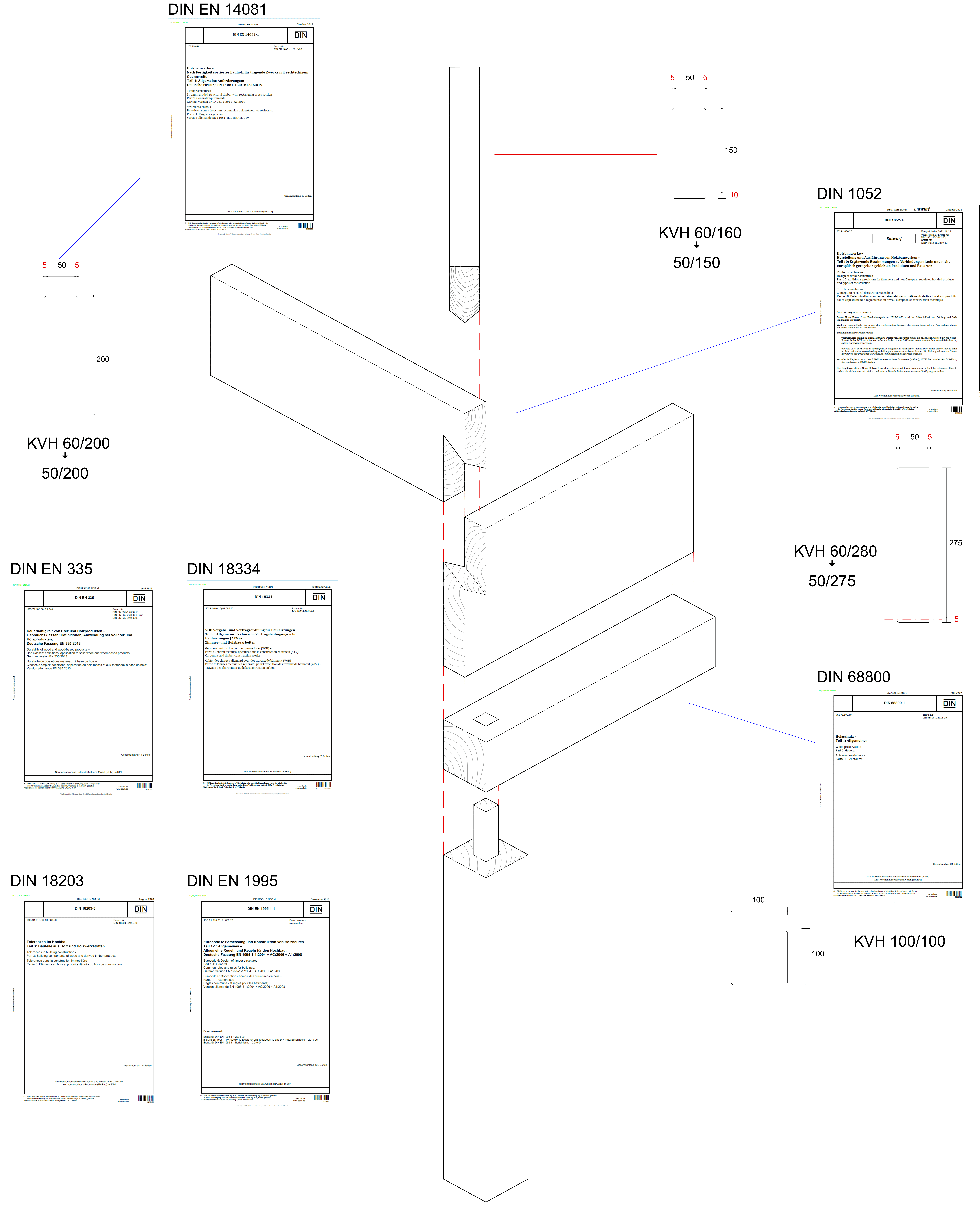
© Benjamin Rieser. All rights reserved.
"This semester we want to indulge in artistic freedoms in construction while simultaneously getting to know and appreciate the "reality" of (re)building, full of constraints, adversities, obligations, and conflicts. Regulations initially trigger a latent feeling of unease because they tell us, more or less bluntly, what we must and must not do. We want to overcome this discomfort. [...]
The term "defect" will stand as the elephant in the room throughout the entire semester. Because as architects, we are (almost always) contractually obligated to design a work free of defects. Put very roughly, a work is free of defects when it exhibits characteristics that correspond to "what is usual," for instance by following the "recognized rules of technology," which also include DIN standards. But then there is so much great architecture that does not at all correspond to "what is usual." Created under conditions that are equally unconventional and therefore also not "generally recognized." One need only think of Marcel Raymaekers' houses, with porticoes from demolished churches or light domes from decommissioned fighter jets. Entire houses made from spolia, built by the building families themselves. How can we classify such architecture in our world, make it possible, and perhaps even allow it to become "usual"?"
-Anna Femmer, Florian Summa from: Mängelfrei Reader
mängelfrei
studio summacumfemmer
group assignment with
Edwin Pfeffer
SoSe 2024
"This semester we want to indulge in artistic freedoms in construction while simultaneously getting to know and appreciate the "reality" of (re)building, full of constraints, adversities, obligations, and conflicts. Regulations initially trigger a latent feeling of unease because they tell us, more or less bluntly, what we must and must not do. We want to overcome this discomfort. [...]
The term "defect" will stand as the elephant in the room throughout the entire semester. Because as architects, we are (almost always) contractually obligated to design a work free of defects. Put very roughly, a work is free of defects when it exhibits characteristics that correspond to "what is usual," for instance by following the "recognized rules of technology," which also include DIN standards. But then there is so much great architecture that does not at all correspond to "what is usual." Created under conditions that are equally unconventional and therefore also not "generally recognized." One need only think of Marcel Raymaekers' houses, with porticoes from demolished churches or light domes from decommissioned fighter jets. Entire houses made from spolia, built by the building families themselves. How can we classify such architecture in our world, make it possible, and perhaps even allow it to become "usual"?"
-Anna Femmer, Florian Summa from: Mängelfrei Reader