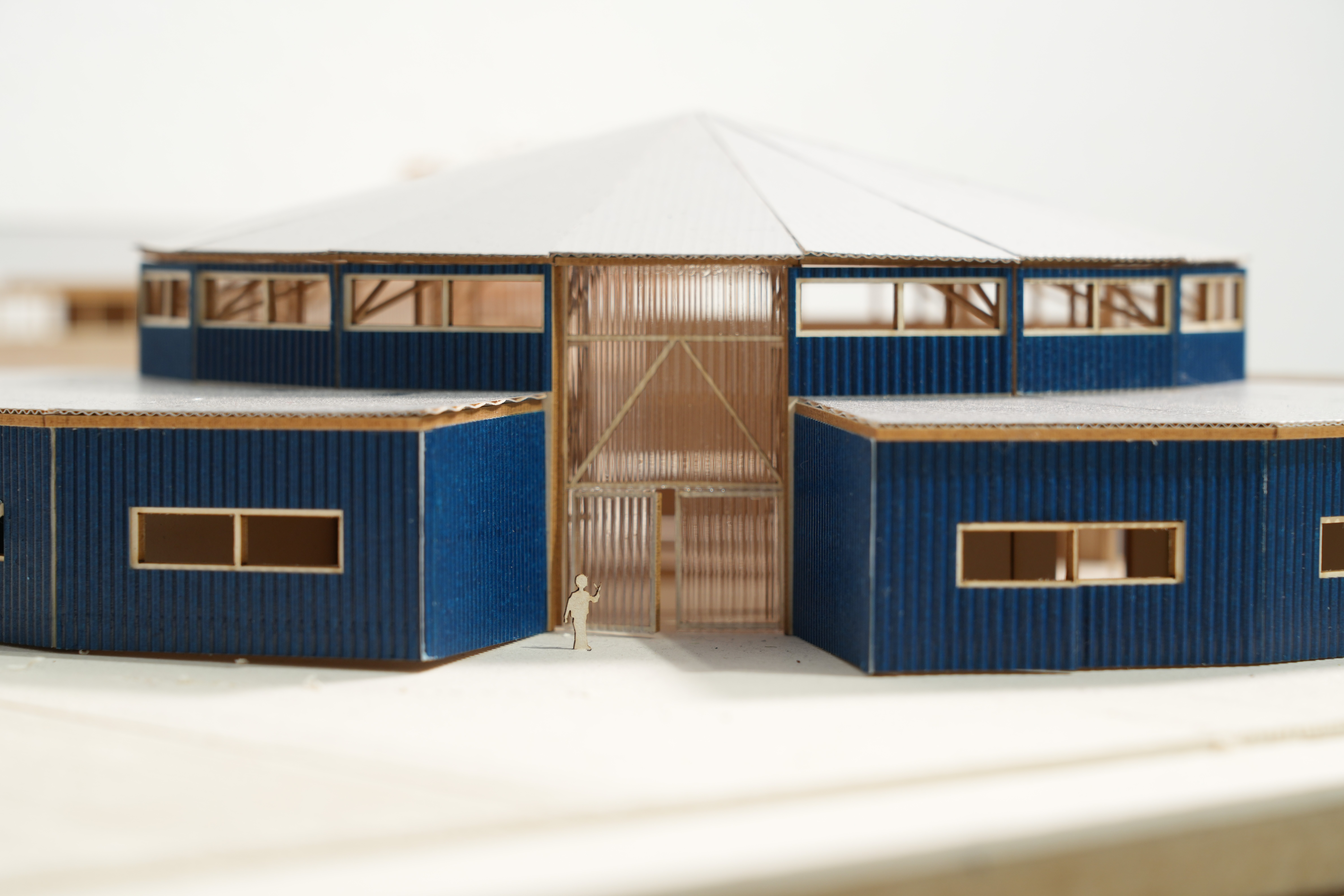
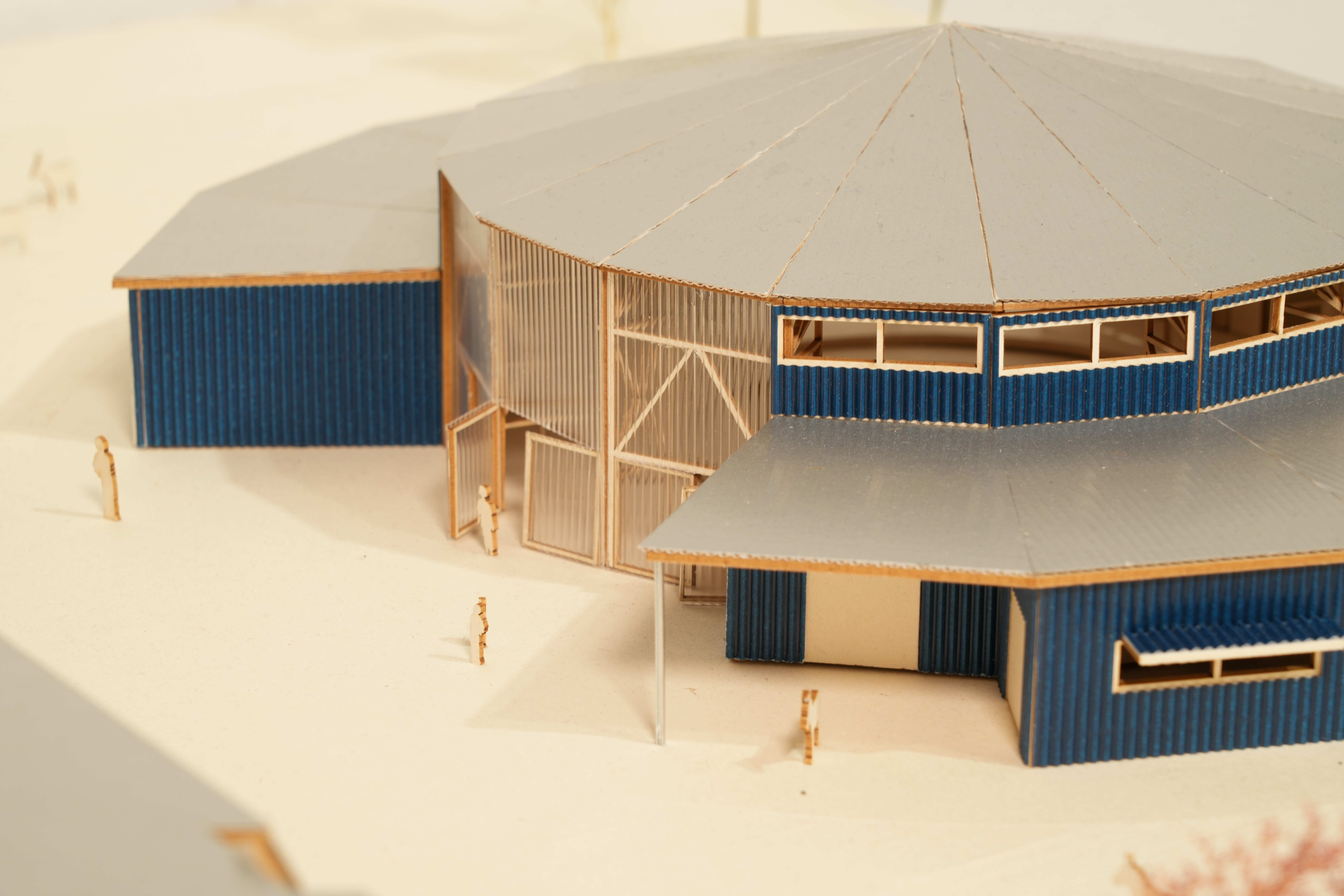
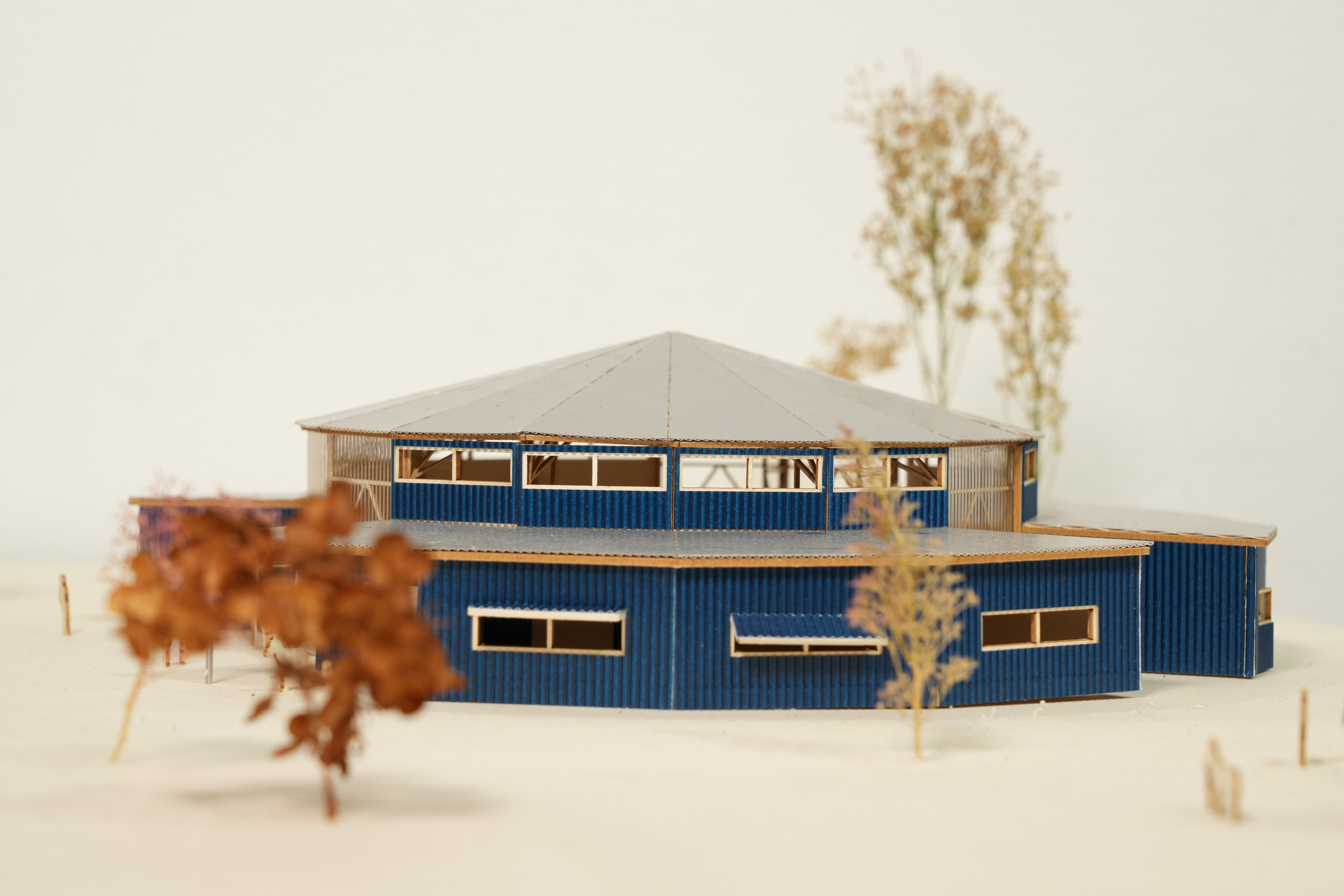
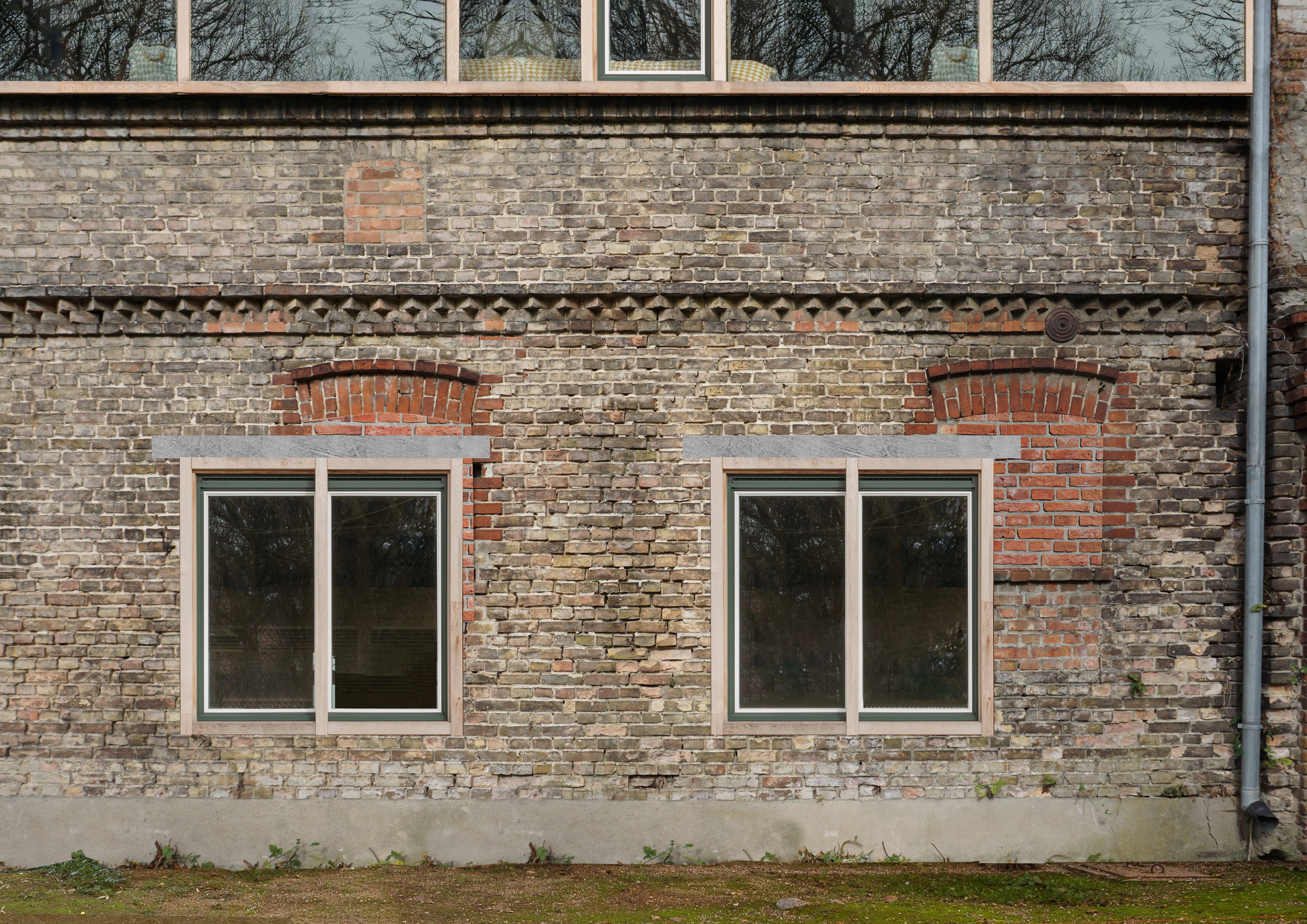
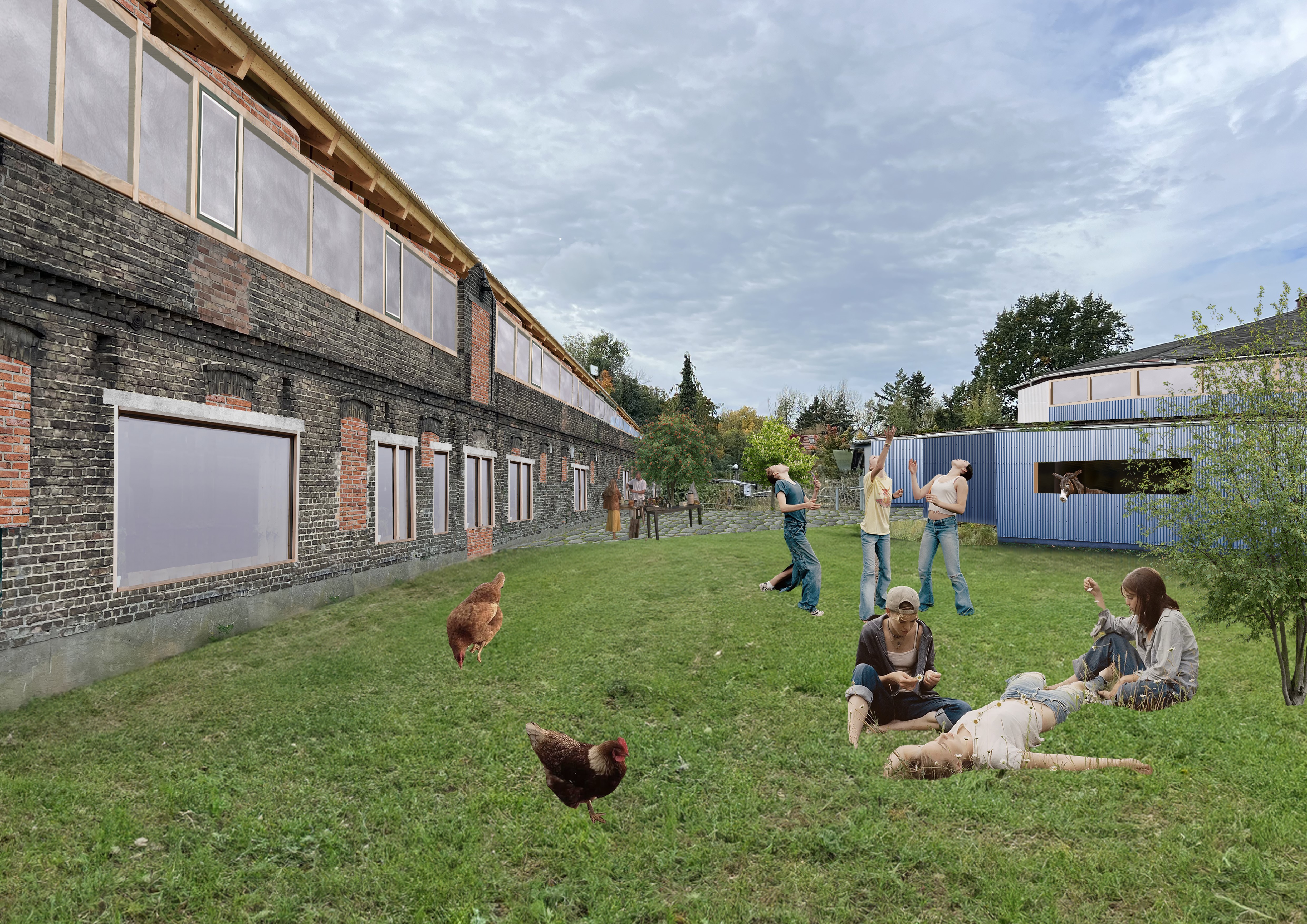
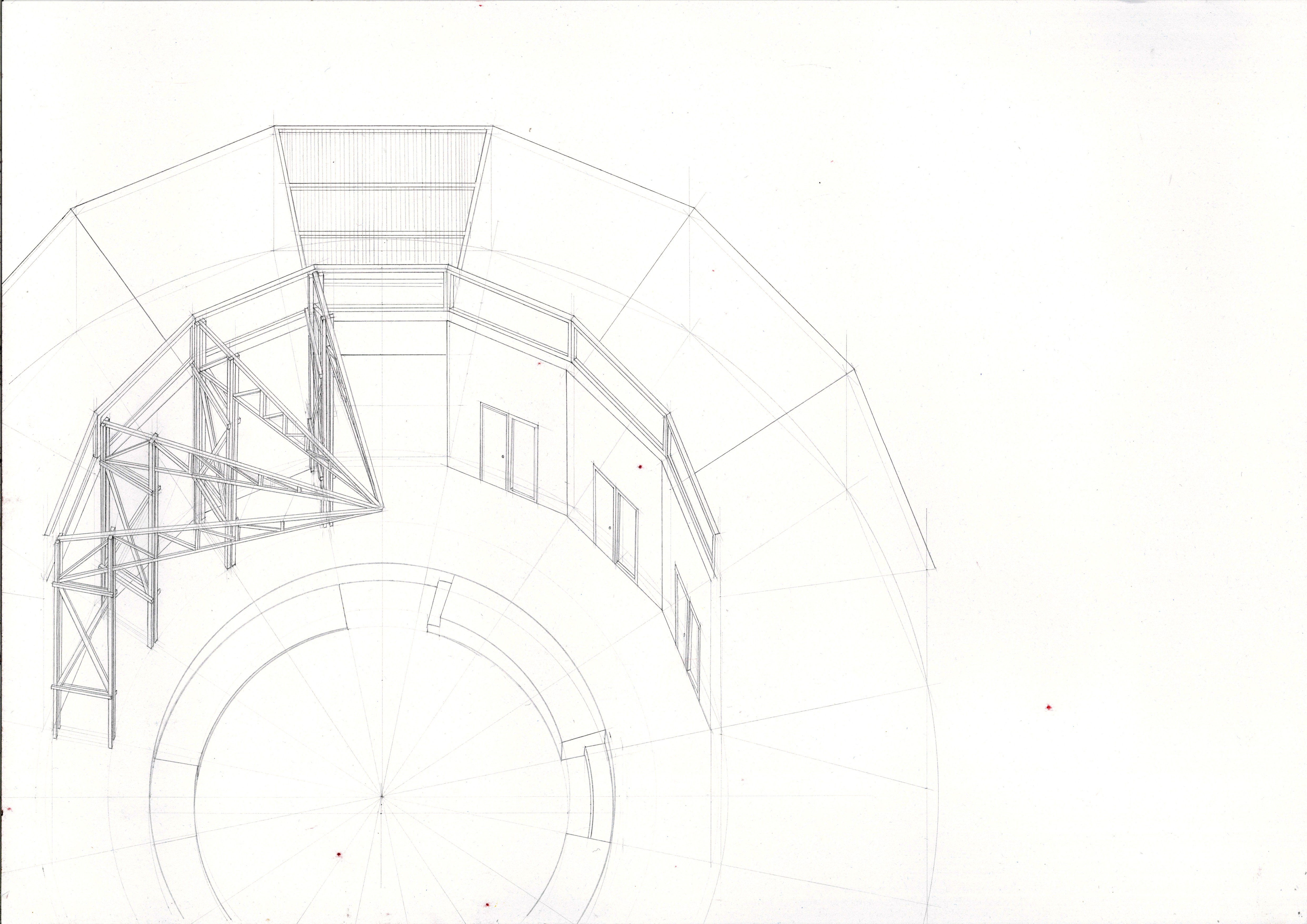
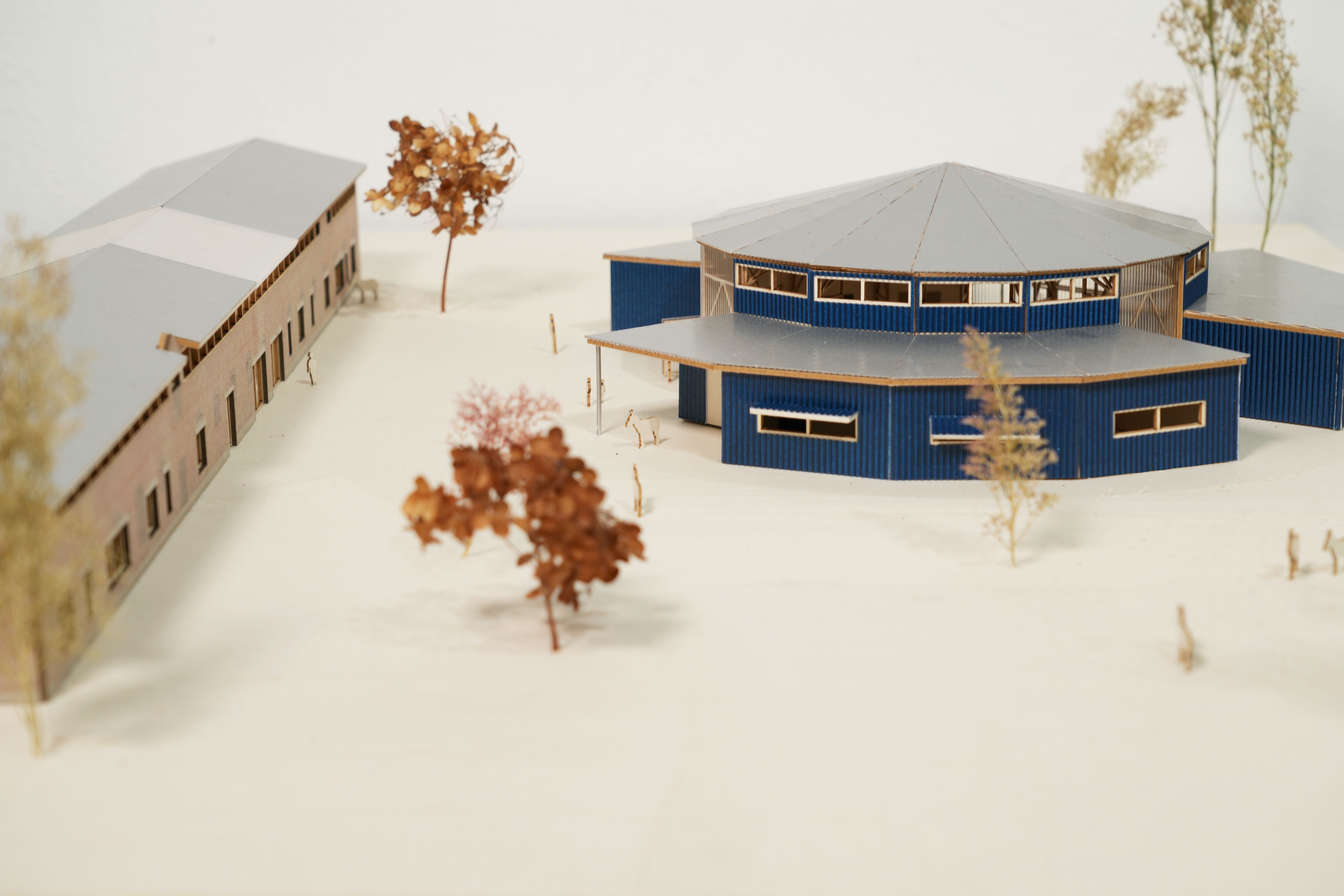
In the existing building, the former stable and the arena are connected by a tunnel. Although it connects the two buildings, it divides the outdoor area in two. We decided to preserve this space as a moment of connection and to create a central outdoor area by designing a courtyard. To strengthen this concept, we remove the three sections of the ring that face the former stable. This connects the arena with the courtyard and transforms it into its outdoor counterpart. On the northwest side, we remove two sections of the ring, and on the northeast side one section, thereby opening the arena further and creating smaller, more intimate courtyards.
In these areas where the ring is opened, we have closed the facade with transparent polycarbonate to make the historic wooden structure visible and bring light into the arena.
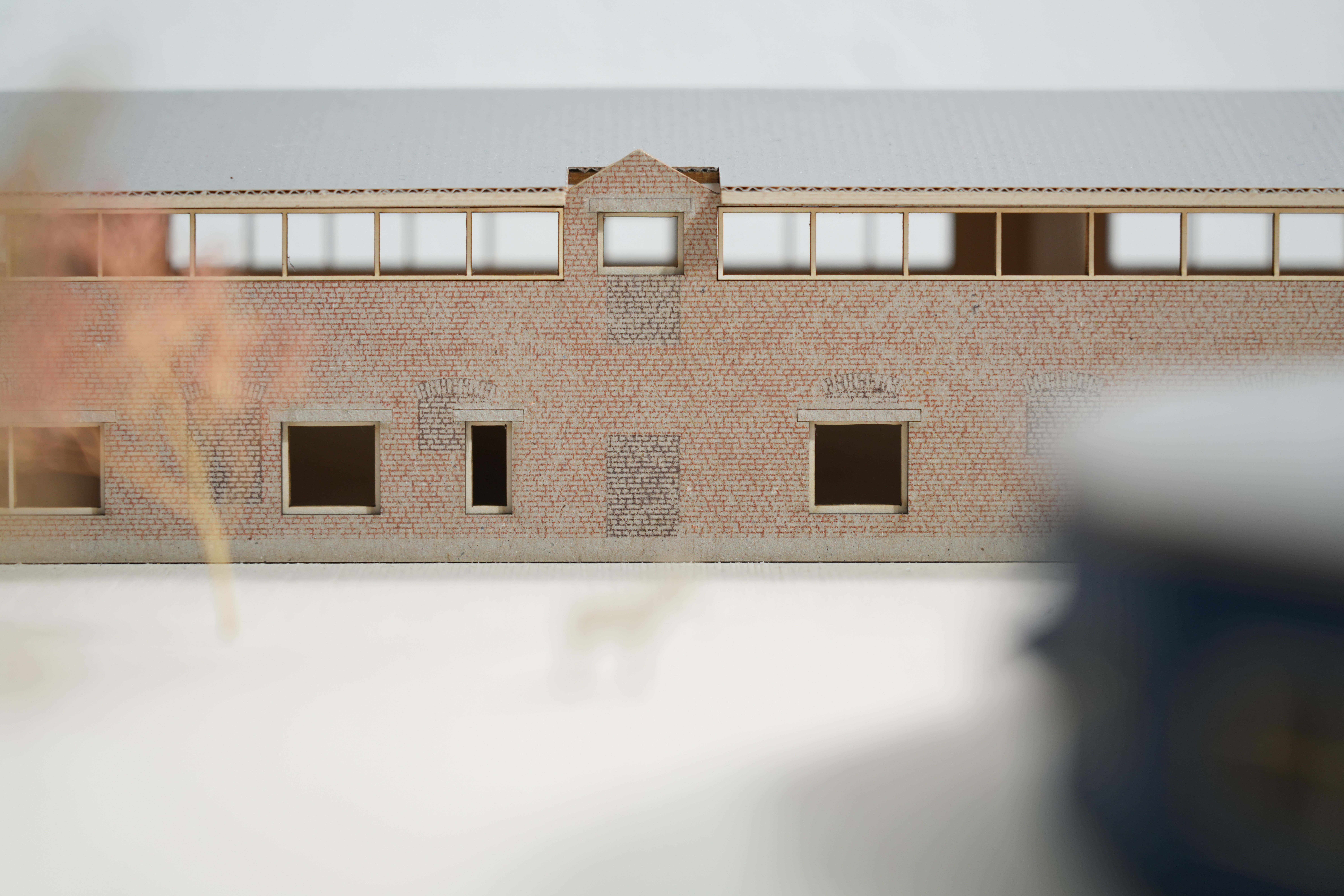
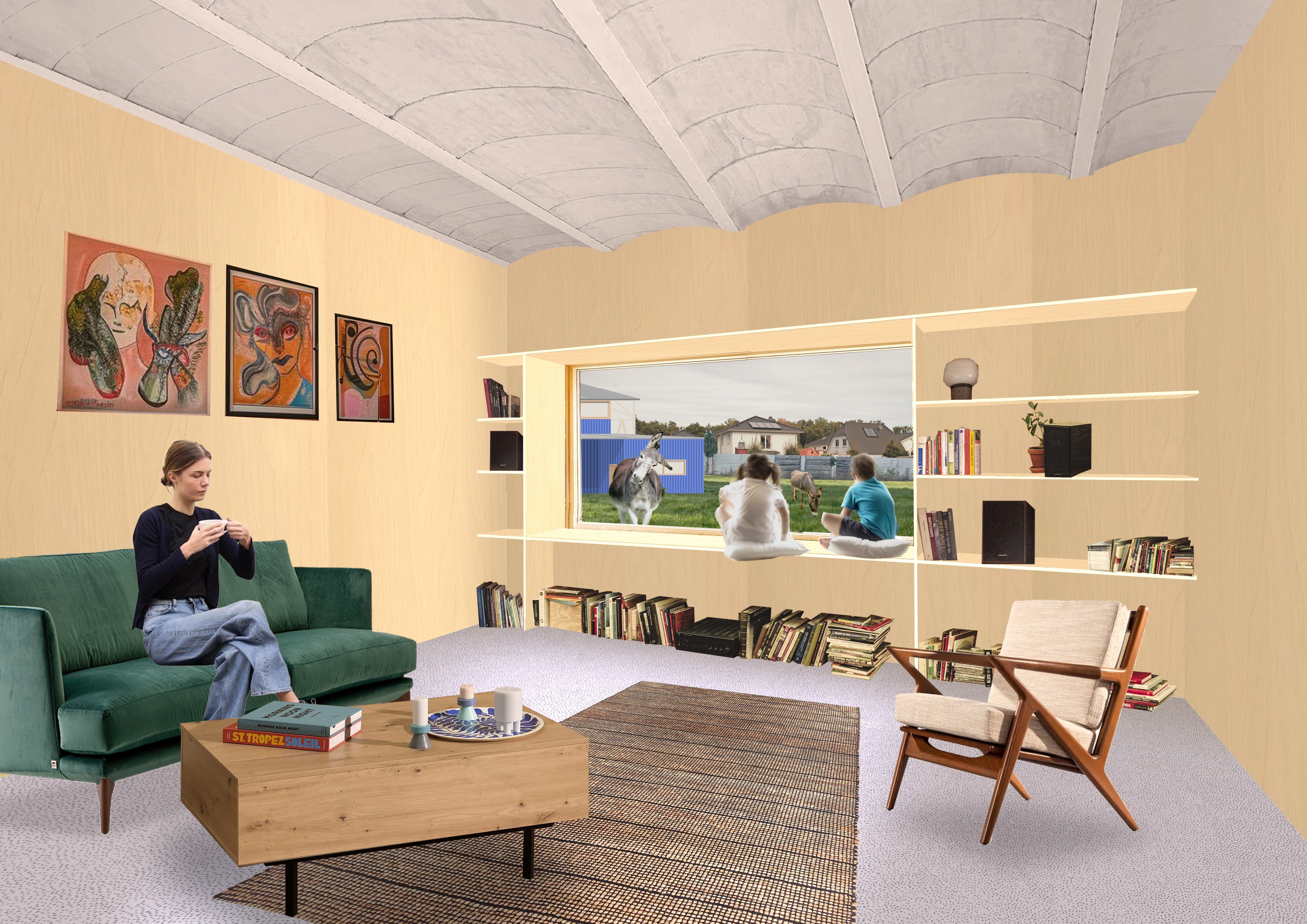
The ground floor of the former stable serves as living space for the residents of the therapy center. There are two residential communities, one on the east side and one on the west side of the building. They are connected by a two-story space that is used as a communal living area. Two large sliding glass doors on each side and a translucent roof flood this space with light and create an atmosphere similar to that of the arena. This space is also used as a dining hall, with the kitchen directly connected. To give residents the opportunity to organize their daily lives independently, the residential communities also have their own kitchens, so residents can prepare their own food or eat in a more private setting. Each residential community also has its own living room to create smaller retreats where one can relax and work.
group assignment mit
Lea Palinske
WiSe 2024
The former winter quarters of the GDR State Circus in Dahlwitz-Hoppegarten were built in the 1950s and served until 1989 as a central training and recreation facility for the circus performers and animals. The approximately 13-hectare site was specifically designed for the needs of circus operations and included numerous stables for animals, practice halls, workshops, and accommodations for the performers.
Particularly striking is the large circular building that served as a training hall for the performers. The adjacent stables provided space for elephants, horses, lions, and other circus animals that spent the winter here while the circus was not on tour during the cold season. After the end of the GDR and the dissolution of the State Circus, the site increasingly fell into disrepair. Some buildings were temporarily used for other purposes, others remained unused or disappeared over the years. In their place, a heterogeneous mix of single-family homes, garden centers, and commercial businesses emerged. Some structural fragments of the former winter quarters still exist, including the circular building with the adjacent stables.
The circular building has a particular history. Originally it was used as a circus hall in Berlin's Friedrichstrasse, then dismantled and reassembled as a temporary structure in Dahlwitz-Hoppegarten. In 1982, a steel construction for aerial performances was inserted into the circular building. Finally, in 2014, the wooden structure of the building, together with the adjacent stables, was placed under heritage protection.
In the past, the winter quarters of the GDR State Circus in Dahlwitz-Hoppegarten were a place where animals and people lived and worked. Today, the part of the site that has not yet been built over with single-family homes stands empty. Our design proposes to give new life to the site and repurpose the heritage-protected circular building and stables into a center for animal-assisted therapy.
The therapy farm will accommodate young people with mental illnesses aged 12 to 16. Here they will find support through individual and group therapy, as well as through working with animals such as donkeys, dogs, rabbits, and chickens.
therapiehof hoppegarten
bachelorarbeit
© Benjamin Rieser. All rights reserved.
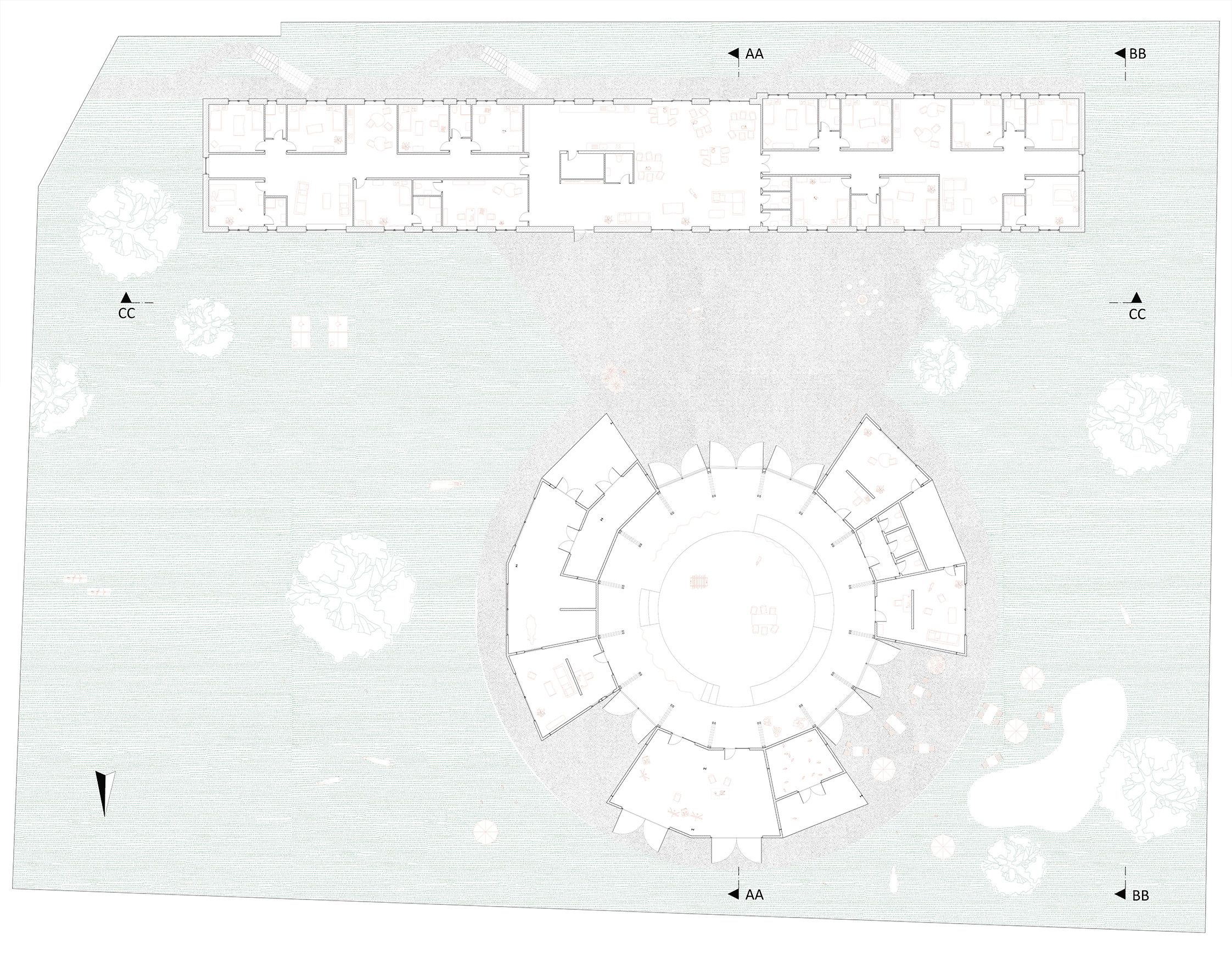
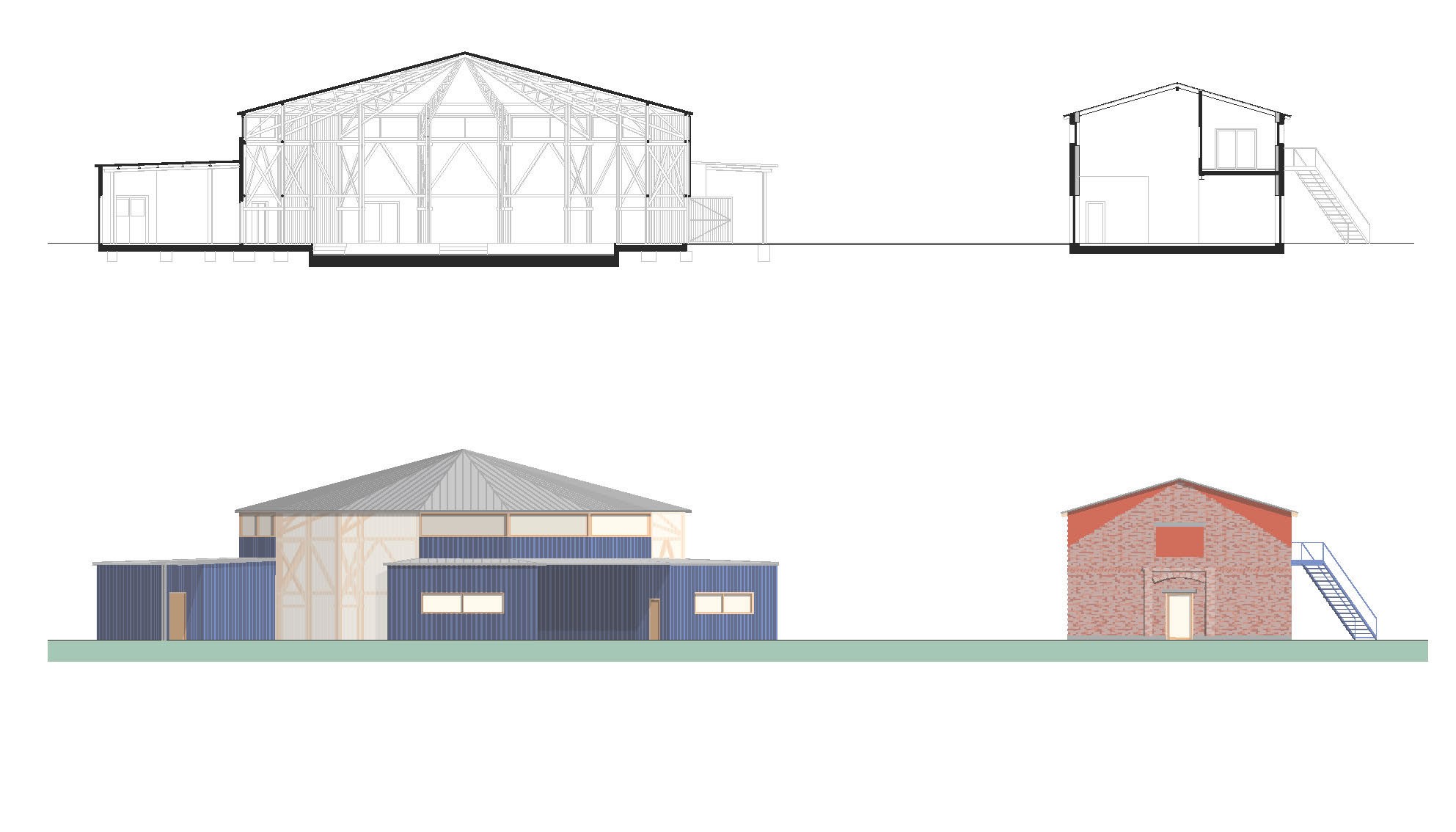

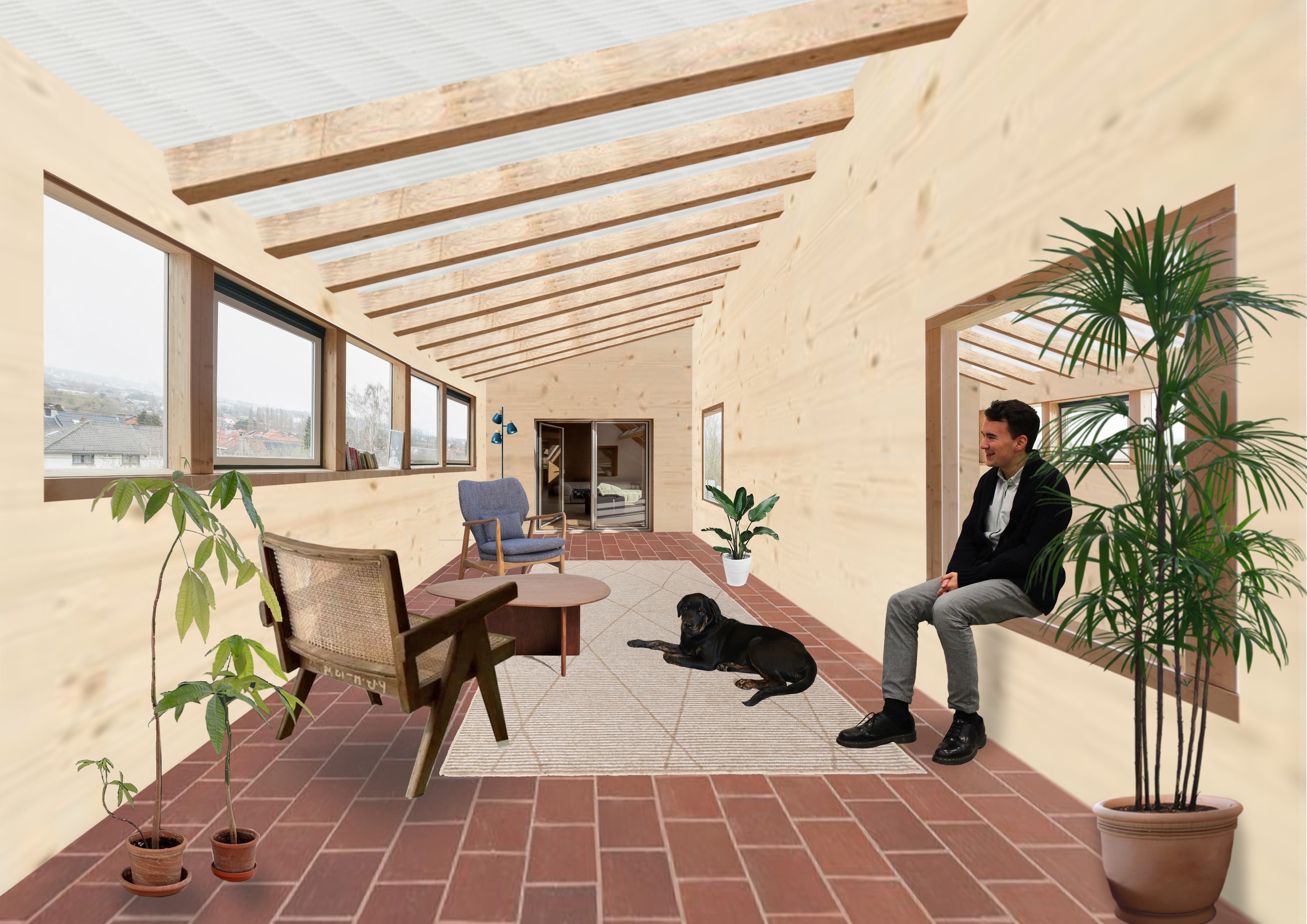
On the upper floor, we have created six apartments of varying sizes that can be used by animal caretakers, therapists, but also by people who are not connected to the center. To ensure the independence of the apartments, access to the apartments is from the south side, while the therapy center is accessed from the north. Two of the apartments are special as they have a shared space in the middle that provides a visual connection to the two-story communal area. To create a pleasant ceiling height and provide the apartments with both light and a view of the surroundings, the roof was raised; the resulting ribbon window opens the space to the north and south.
Our design explicitly attempts to show and strengthen the contrast, but also the convergence between old and new use. The project creates a space for healing and encounter where animals and people feel comfortable.